Ancient Egyptian horse burial reveals military life
Summary and headline written by AI from the source article. How we work
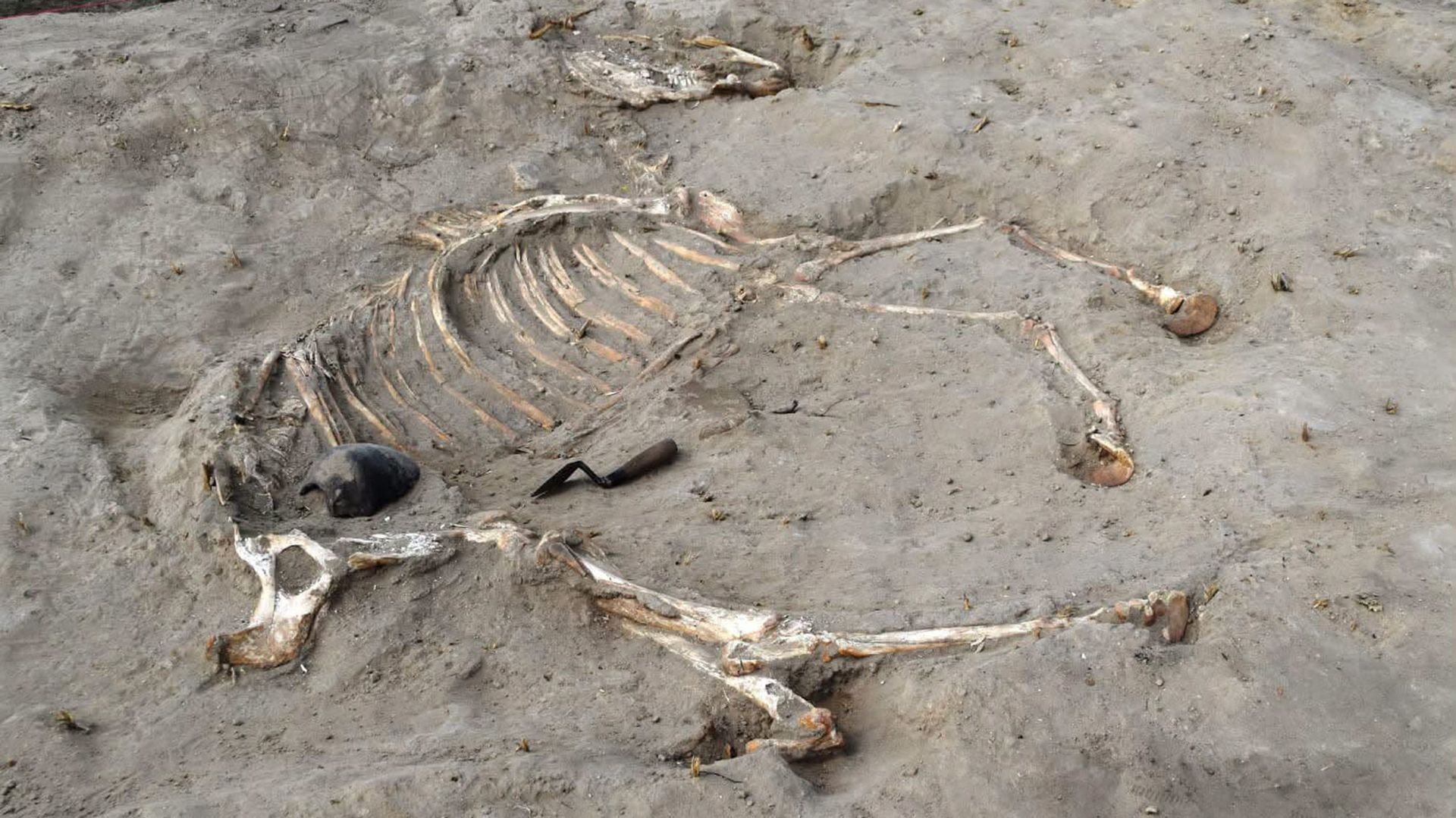
Archaeologists working in Egypt’s Lake District unearthed a 3,000-year-old horse burial within an ancient fort at Abqaa’.
The horse, a young male, likely served a military function, possibly pulling chariots. Researchers also discovered harness fittings near the remains, suggesting a ceremonial burial. The fort dates to Egypt’s New Kingdom period, from 1550 to 1070 B.C., and protected the country from Libyan tribes.
Alongside the horse, the team found a stone tablet depicting a captured Libyan prisoner from the Meshwesh tribe, shown in a posture of submission. Hieroglyphic tablets bearing the names of pharaohs Ramesses II and Merneptah also came to light, with the latter comparing his strength to the god Seth. Scholars not involved in the dig called the horse burial a unique find, because complete horse skeletons are rare in ancient Egyptian archaeological records.
While definitively labeling the horse a “war horse” remains difficult without a clear definition from the period, experts agree the animal was valuable and its careful burial reflects its importance to the ancient Egyptians. The discovery could provide insights into the use of horses in military forts.