Fossil owl discovery narrows time frame for when owls became nocturnal
Headline and summary by local AI
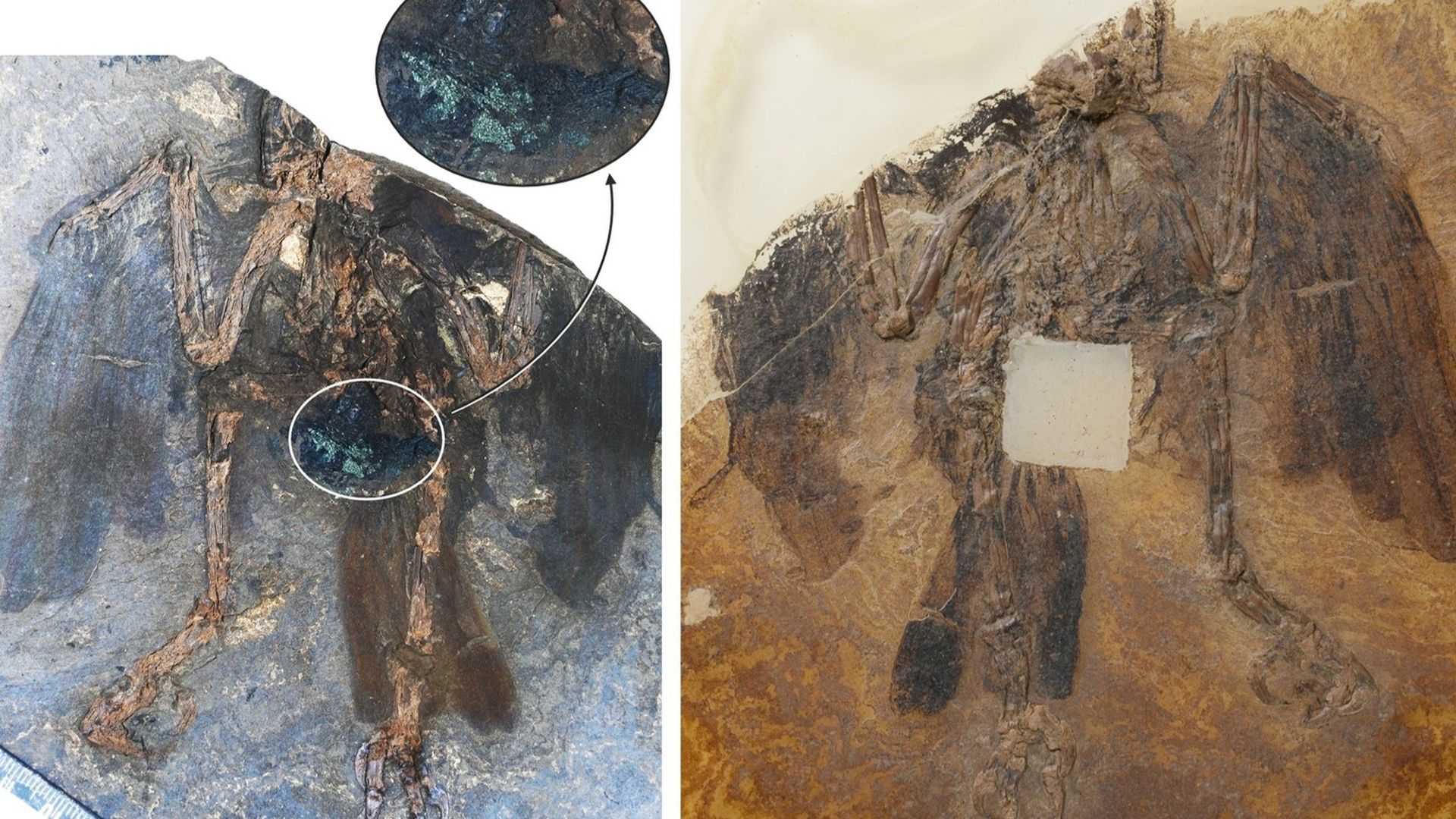
Paleontologists discovered a nearly perfectly preserved fledgling owl fossil from 47 million years ago in the Messel Pit, a fossil site in Germany.
The researchers identified the bird as a new species called Masillastrix blattophaga. While the skull of the bird is missing, the preservation was high enough for the team to find a greenish-blue, iridescent cockroach inside the owl's stomach.
The team used the presence of the iridescent cockroach to suggest that the owl was diurnal, meaning it was active during the day. They also analyzed the bird's wing bones, noting that the stocky humeri suggest the owl did not need to fly silently to avoid predators. Gerald Mayr, a paleontologist at the Senckenberg Research Institute and the Natural History Museum Frankfurt, stated that these findings indicate owls were not nocturnal 47 million years ago.
The study suggests that owls likely transitioned to a nocturnal lifestyle between 47 million and 35 million years ago. While the earliest known owl in the fossil record dates to 60 million years ago, the first known nocturnal species appeared around 35 million years ago in the Late Eocene.
The research leaves it unclear why owls made this shift, as the rise of nocturnal mammals and competition with other birds of prey occurred much later, between 20 million and 25 million years ago.
Selected and summarized by local AI How we work