Archaeologists unearth 2,000-year-old Celtic coin hoard in Hungary
Headline and summary by local AI
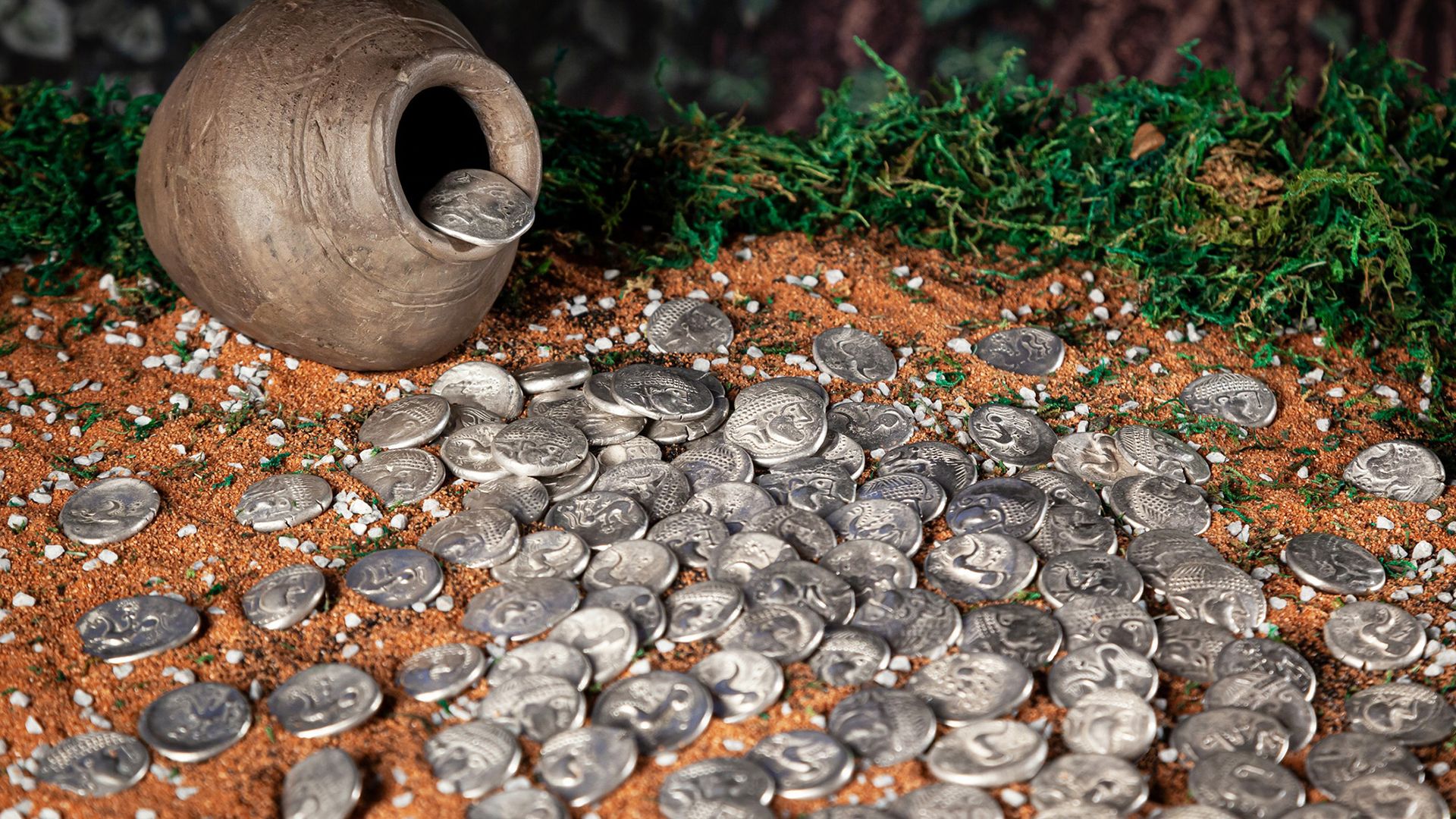
Archaeologists in western Hungary discovered a stash of more than 200 Celtic silver coins during excavations for a new electrical substation.
The team found the cache, which dates between the late second century B.C. and the early first century B.C., buried about 16 inches below the ground inside a small ceramic vessel. The power company E.ON reported that the coins weigh roughly 4.4 pounds and represent one of the largest hoards found in the region in decades.
The coins are modeled after Greek tetradrachms, which were large silver coins introduced in the late sixth century B.C. These specific copies, known as Velem coins, feature a stylized head of the Greek god Apollo on one side and a helmeted rider on a horse on the other. Experts at the National Archaeological Institute say this find is rare for Europe, noting that the last similar discovery in Hungary occurred in the late 1960s.
The excavation site in the Szombathely region revealed evidence of human occupation spanning more than 7,000 years. Beyond the coin hoard, researchers found a stone chisel used for woodworking and a glass bead from the sixth or seventh century B.C. The team also identified the layout of a Roman-era villa that was built on the site centuries later. The artifacts will eventually be displayed in a museum exhibition.
Selected and summarized by local AI How we work