Russia’s 11th-century bread peel also served as game board
Summary and headline written by AI from the source article. How we work
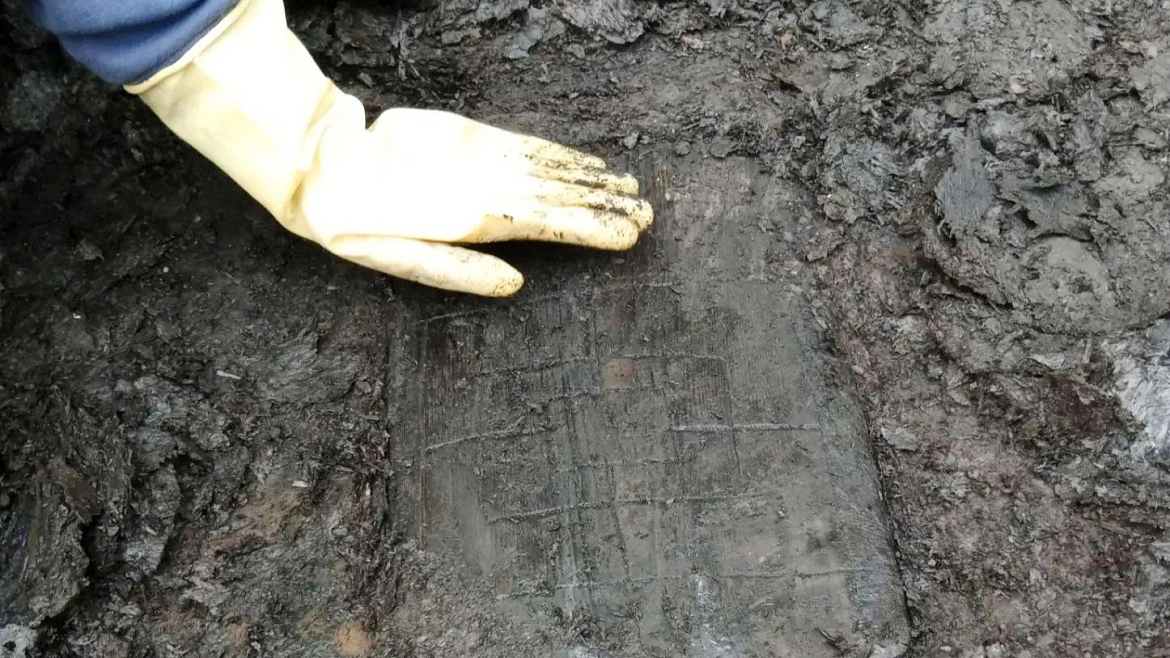
Archaeologists in Staraya Russa, Russia, uncovered an 11th-century wooden bread peel, a flat paddle bakers used to move bread in and out of ovens, that also features a carved game board on its reverse side.
Sergey Toropov, director of Novgorod State University’s Center for Archaeological Research, led the team that found the roughly 12-by-16-inch object.
The peel, likely made of oak, shows evidence of being used for baking on one side and has a board for the strategy game merels carved into the other. Merels, also known as nine-men’s morris or mills, was popular in medieval Europe and Asia, requiring only a board and small pieces to play.
Players aim to form lines of three with their pieces, removing opponent’s pieces when they succeed, with the goal of leaving the opponent with too few pieces to move. Archaeologists have found similar game boards scratched onto other everyday objects, suggesting people often improvised playing surfaces.
Researchers note that merels boards have appeared in archaeological sites dating back to the ninth century in the region, once the territory of the Rus', ancestors of modern Russians who arrived as Vikings in the eighth century, but a well-preserved example like this one is rare. The team is currently unsure if the object was originally intended as a dual-purpose tool or if it was repurposed into a game board after being damaged.