Star’s remnants reveal unusual symmetry after samurai era explosion
Summary and headline written by AI from the source article. How we work
In 1181, astronomers in Japan, China, and Arabia observed a star exploding in the Cassiopeia constellation, an event recorded for at least 185 days.
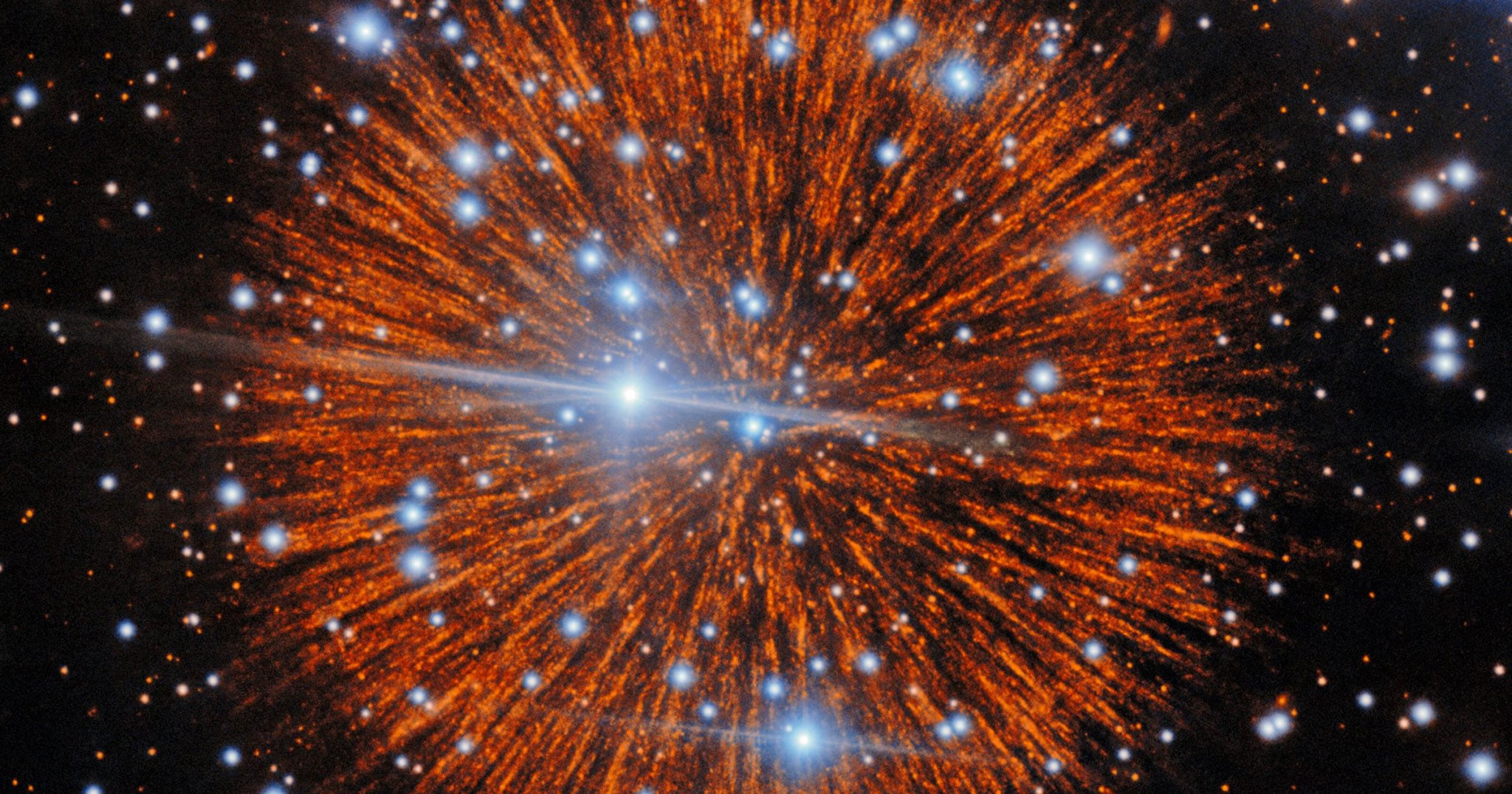
Modern astronomers recently used the Gemini North telescope in Hawaii and Chile to study the debris field from this supernova, known as Pa 30, located 7,500 light-years from Earth. They found the surviving star at the center of the explosion surrounded by unusually uniform knots of ionized gas.
This supernova is unique because the star did not completely disintegrate, a phenomenon known as a Type Iax supernova, and remains at the center of the explosion. Scientists theorize that Pa 30 formed from the collision of two white dwarfs, small, dense stars, but struggle to explain why the surviving star shows almost no movement, given the symmetrical nature of the explosion.
The new images reveal ten times more filaments of ionized sulfur than previous observations, and the knots of gas are so large that ten of our solar systems could fit inside each one. Researchers at the Institute of Science and Technology Austria hope to find other Type Iax supernova survivors in the Milky Way with more detailed observations to better understand these rare events.