American student Finds 3,300-year-old Egyptian scarab seal at Tel Gezer
Headline and summary by local AI
A 17-year-old American high school student named Shiloh Attoun found a 3,300-year-old scarab seal while on a study tour at Tel Gezer in Israel.
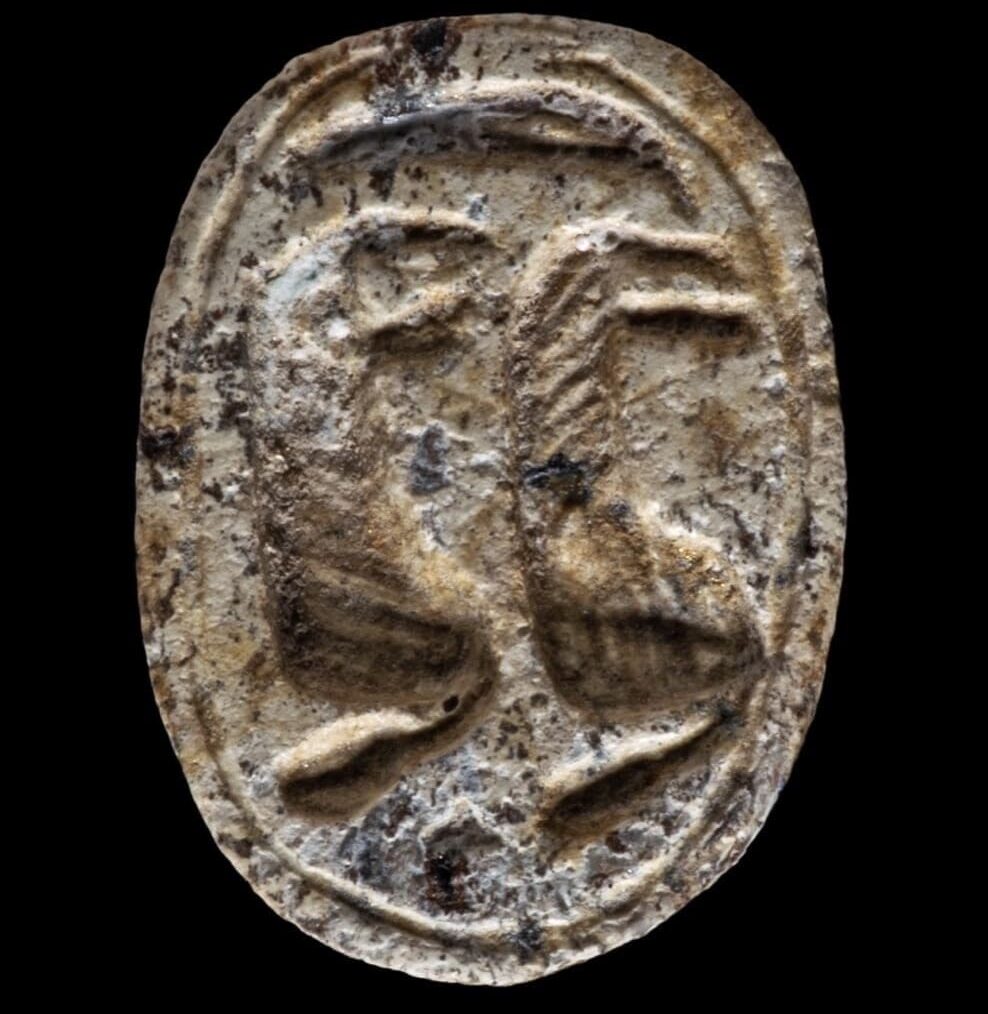
Attoun spotted the object on the side of the road during a field excursion and alerted his guide. The artifact features a face with two upright cobras, a symbol commonly associated with Egyptian royalty and protection.
The Israel Antiquities Authority says the find demonstrates how ancient Egypt influenced the culture of Gezer during the Late Bronze Age. Ido Koch of Tel Aviv University examined the scarab and noted that the cobras represent the uraeus, a symbol used in Egyptian and Greek contexts. He also identified a hieroglyphic sign below the cobras that translates to "lord." Tel Gezer is a historically rich site in the Judean foothills that served as an important Canaanite fortified city.
During the second millennium, the city sat on trade routes connecting Egypt with Syria, Anatolia, and Mesopotamia. Historical records show that Egyptian pharaohs, including Thutmose III and Merneptah, interacted with the city. Archaeologists have found evidence of destruction at the site dating to approximately 1218 to 1172 BCE. The National Treasures Department of Israel now holds the scarab seal for further preservation.
Selected and summarized by local AI How we work
Discovery: Archaeology, new knowledge of art, culture and history, forgotten history uncovered, something lost restored.