Ancient Roman fresco and mosaic open to public
Summary and headline written by AI from the source article. How we work
In Rome, Italy, authorities revealed a large fresco and mosaic discovered nearly three decades ago beneath the Baths of Trajan on Oppio Hill, near the Colosseum.
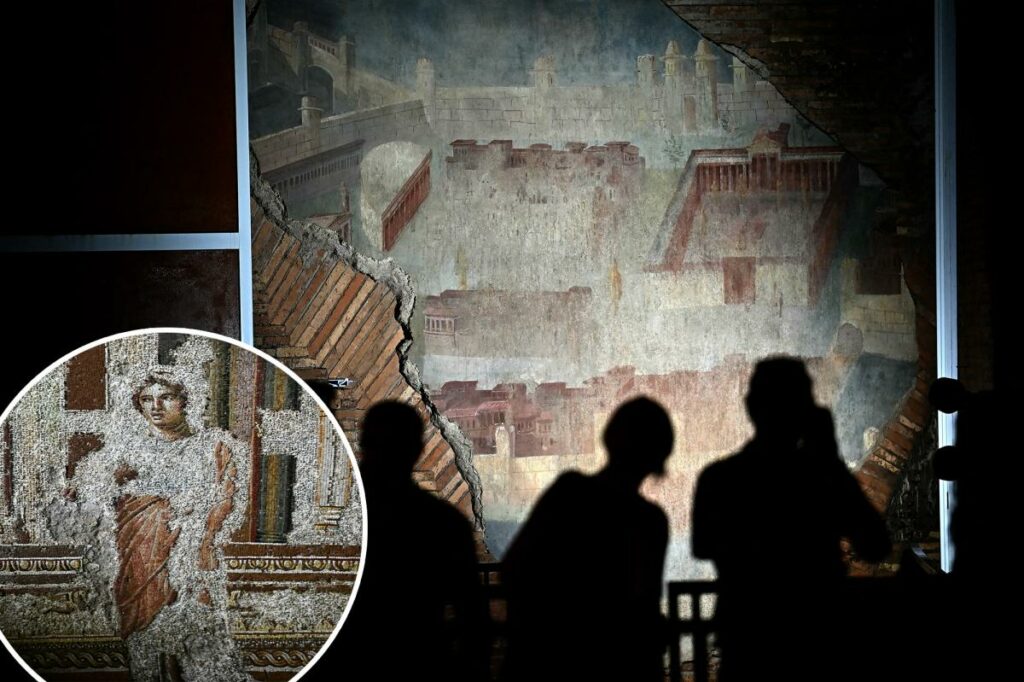
The fresco, dating to the first century AD, depicts a fortified port city from above, showing buildings, a theater, temples, markets, and towers. Its blue and terracotta colors remain remarkably well-preserved despite the passage of time, and experts consider “The Painted City” the largest mural fresco of its kind known from Ancient Rome.
Archaeologists do not yet know which city the fresco portrays, but believe it was a significant place during its time. Alongside the fresco, “The Great Mosaic” also impressed viewers with its size and detail. The mosaic stretches around 15 meters tall, displaying decorated columns, architectural elements, and figures across four levels. Restorers cleaned and strengthened the artworks to preserve them, and the public can now view them in small groups on weekends during a trial period.
Specialists will monitor the effects of humidity and climate change on the artworks before fully opening them to visitors. The Baths of Trajan, which opened in 109 AD, once covered six hectares and were the largest thermal complex in the world, also included a semicircular library.