India’s ‘plastic man’ builds roads from waste
Summary and headline written by AI from the source article. How we work
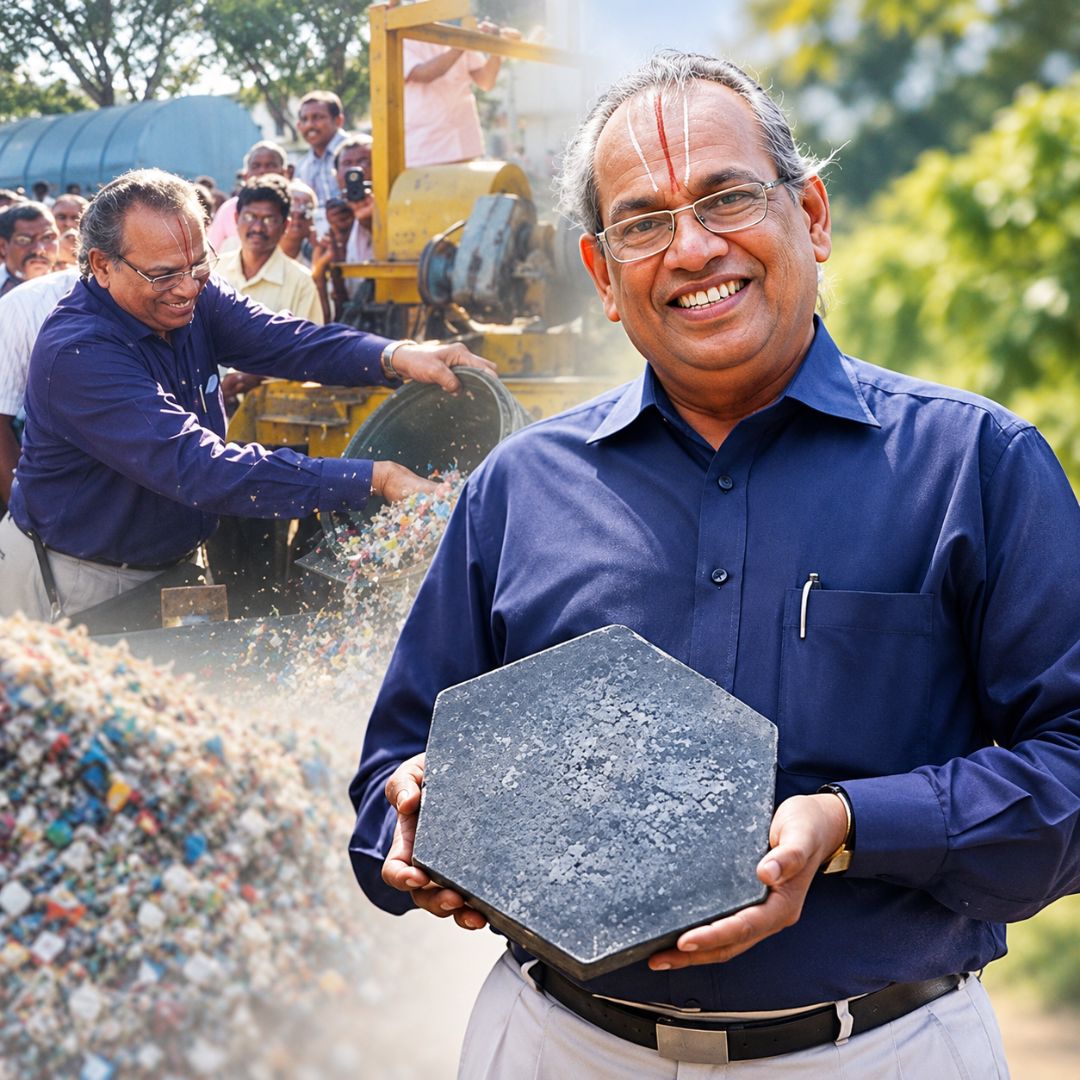
Dr Rajagopalan Vasudevan, a chemistry professor in India, created a process to incorporate shredded plastic waste into road construction in the early 2000s.
Concerned about the growing environmental impact of plastic, Vasudevan began researching ways to reuse it instead of banning it. He discovered that melted plastic could bind with stone and bitumen, the material typically used in roads, reducing the amount of bitumen needed.
In 2002, Vasudevan demonstrated his technique by paving a road at Thiagarajar College of Engineering in Madurai after receiving encouragement from Dr APJ Abdul Kalam. He patented the process in 2006 and later received the Padma Shri award. Since then, the method has been used to pave nearly 10,000 kilometers of roads across India, with additional projects sanctioned by the national government. Experts acknowledge the innovation but caution that proper waste collection and segregation are crucial.
Dr Noreen Thomas of Loughborough University noted that mixed plastic waste can pose risks if its composition is unknown. Vasudevan has also developed ‘plastone,’ a construction material made with waste plastic, for use in tiles and paving. He believes the problem isn't plastic itself, but how people manage it.