Portland residents influence climate policy through community data
Summary and headline written by AI from the source article. How we work
The Coalition of Communities of Color (CCC) and the City of Portland reversed traditional policymaking by involving residents in the design of climate and building regulations.
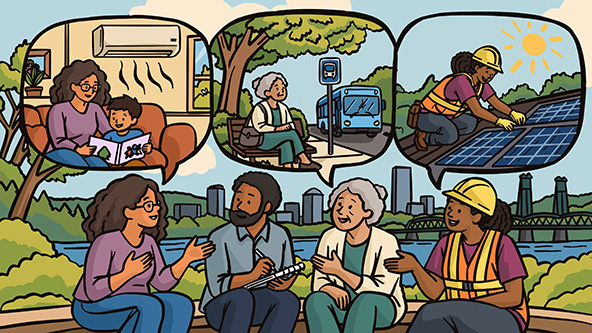
Following a 2021 heat dome in the Pacific Northwest where temperatures in Portland reached 116 degrees and nearly 100 Oregonians died from heat-related illnesses, the CCC collaborated with community members to identify specific needs.
Instead of experts drafting a finished proposal for public review, the city convened residents first to gather "community data" regarding their lived experiences with extreme heat. Participants identified several barriers to staying cool, such as landlords prohibiting window air conditioning units for aesthetic reasons. These conversations resulted in the HEART Standards, a framework focusing on health, equitable energy, anti-displacement, resilience, and temperature. This community-led data directly influenced Oregon’s Senate Bill 1536, which became law in 2022.
The legislation protects tenants' rights to use cooling units and established the Oregon Rental Home Heat Pump program, a $15 million fund providing rebates to landlords for energy-efficient heat pumps. The process also shaped the Climate Justice Plan for Multnomah County, where a steering committee of 13 community-based organizations refused to organize the plan by standard government sectors like transportation or energy. Instead, they reorganized the plan around lived realities such as housing quality, health, and cultural belonging.
While the city and county still use technical experts to model emissions and draft legal language, the community now defines the questions and values that guide those technical experts.