Ancient tomb reveals details of Peru’s Chimú elite
Summary and headline written by AI from the source article. How we work
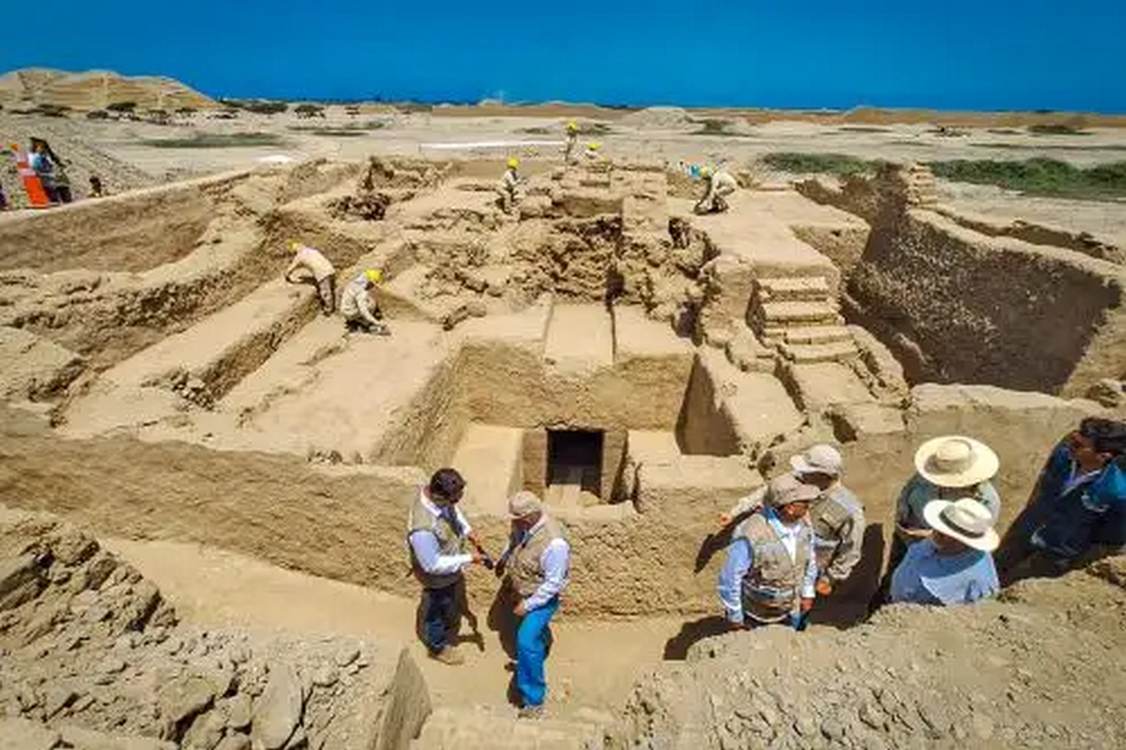
Archaeologists in Peru uncovered a 600-year-old, undisturbed tomb within the UNESCO World Heritage site of Chan Chan, a city built by the Chimú civilization.
The tomb, located inside a palatial complex called Utzh An, held the remains of 38 individuals and a variety of valuable artifacts. Jorge Meneses led the team excavating the site, which revealed a mausoleum containing one individual with a skull painted red and two chambers with additional remains and objects.
The Chimú people flourished in the 15th century, building settlements with advanced irrigation systems and residences for their leaders. Their societal structure and infrastructure influenced the later Inca empire, who conquered them in the 1460s. Prior to this discovery, knowledge of Chimú elite burials came from previously looted sites and collections, lacking scientific data about the individuals and their possessions.
The arrangement of the primary individual’s body, fully extended rather than seated or flexed as was typical, and the absence of some bones suggest the person may have been moved to the tomb from elsewhere, a practice common in Andean cultures. Meneses noted that only a small portion of Chan Chan has been excavated, implying the potential for many more discoveries at the site.