World Wildlife Fund turns 65, history marked by progress
Summary and headline written by AI from the source article. How we work
Sixty-five years ago, on September 11, 1961, naturalists founded the World Wildlife Fund (WWF) to protect animals and their habitats.
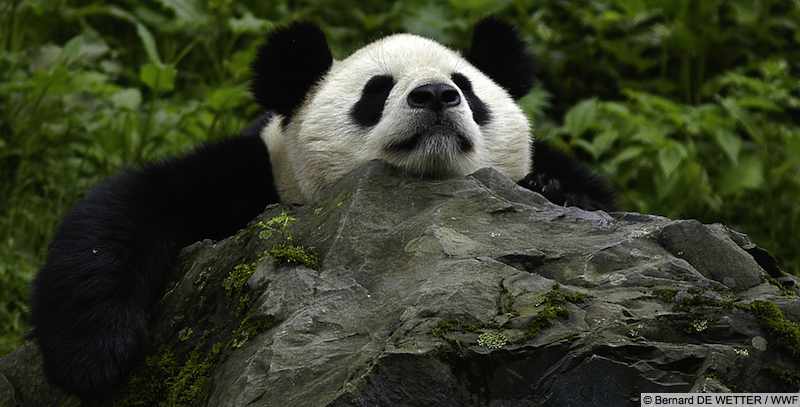
The organization, now with 35 million supporters in nearly 100 countries, has established protected areas like the Galapagos National Park and worked to conserve pandas, tigers, rhinos, and elephants. WWF expanded its focus from simply protecting species to address the larger drivers of nature loss, including food and energy production, and developed the first eco-labels for consumer products.
On the same day in 1906, Mahatma Gandhi first used the term ‘Satyagraha’ to describe non-violent movements. In 1997, Scots voted to re-establish their own Parliament after a 291-year union with England. Also in 1997, NASA’s Mars Global Surveyor spacecraft reached orbit around Mars after a 300-day, 466 million mile journey to map the planet. Throughout history, September 11 has also seen resistance to imperial powers.
In 9 AD, Germanic tribes defeated a Roman army at the Battle of the Teutoberg Forest, halting Roman expansion into Germany. Similarly, in 1297, Scottish forces under William Wallace and Andrew Moray defeated the English at the Battle of Stirling Bridge. In 1945, Dutch physician Willem J Kolff successfully used his artificial kidney to perform the first dialysis treatment, a procedure that has saved countless lives.