Researchers study 2,000 year old Roman glass in Portugal

Headline and summary by local AI
Researchers from Universidade Nova de Lisboa are studying Roman artifacts discovered in a necropolis in Alcácer do Sal, Portugal.
The artifacts were recovered by the company ERA Arqueologia from the ancient Roman city of Salacia, located in the Setúbal district. The archaeological site contains a funerary context with several graves. Among the items found are sets of local ceramics and glass objects in a notable state of preservation.
The discovery includes a specific glass object decorated with Egyptian blue, which was the first pigment synthesized in antiquity. Inês Coutinho, a researcher at the university, leads the investigation through the VICARTE research unit. The project involves an interdisciplinary team of researchers, master's students, and the Universidade de Granada in Spain. The team aims to use these finds to understand Roman production technologies, raw materials, and trade routes.
Archaeologist Paula Pereira says the presence of the pigment indicates that the local population had access to long distance trade networks. These connections suggest that the inhabitants of Salacia had commercial and cultural ties with different regions of the Roman Empire, including territories in the East. The research will continue to explore funerary practices and the integration of the city into Mediterranean exchange networks.
Selected and summarized by local AI How we work
More in Discovery

Kazakhstan releases first Kazakh translation of Italian Classic Pinocchio
astanatimes.com · 16 Nov 2026

Translator sotiris xalikias explores the cultural collision of China and the west
tovima.gr · 20 Nov 2026
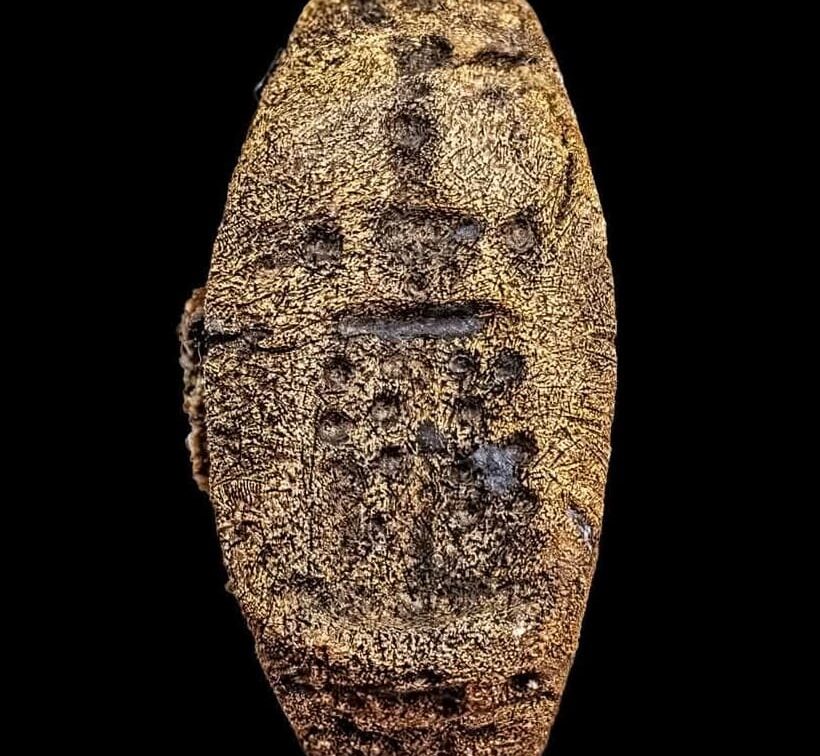
Egyptian officials find bronze ring depicting ancient lighthouse of Alexandria
biblicalarchaeology.org · 23 Nov 2026