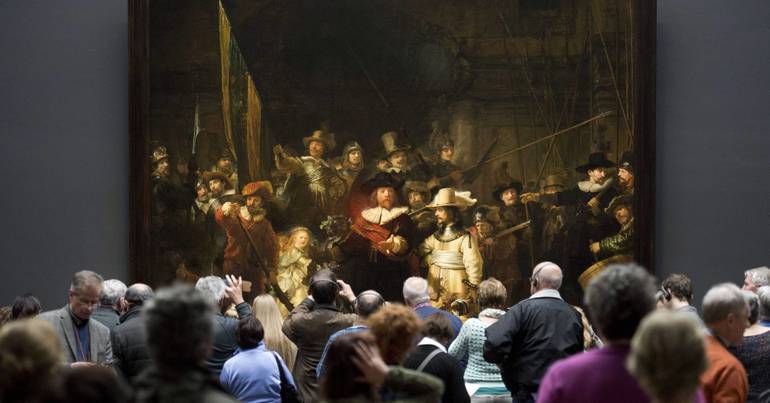
Scientists discover microbes living on Rembrandt's night watch painting
Headline and summary by local AI
The Artis-Micropia museum and the Rijksmuseum in Amsterdam collaborated to identify microorganisms living on Rembrandt's masterpiece, The Night Watch.
Researchers collected samples from approximately 60 points on the painting over a six-month period to study the invisible life inhabiting the artwork. The team grew these microorganisms into colonies and placed them on Petri dishes for public display in an exhibition titled A Ronda Noturna Vive.
Microbiologist Eline van Bloois noted that many of the identified bacteria are commonly found on human skin or in soil. While these microbes do not pose a risk to the painting, the researchers cannot determine if the organisms have been on the canvas for 400 years or arrived more recently. One specific finding surprised the team when they discovered a bacterium of the genus Saccharophyllum in an area where varnish had been removed.
This specific microbe is typically found in a region of Japan that contains a sugar refinery. Katrien Keune, the scientific director of the Rijksmuseum, stated that the knowledge gained from this study could be applied to other paintings. The project is part of a larger initiative called Operação Ronda Noturna, which has involved public restoration work since 2019. The museum will continue to collect new samples in the coming months to update the exhibition.
Selected and summarized by local AI How we work