Pataxó territory in Bahia faces mining and eviction threats
Summary and headline written by AI from the source article. How we work
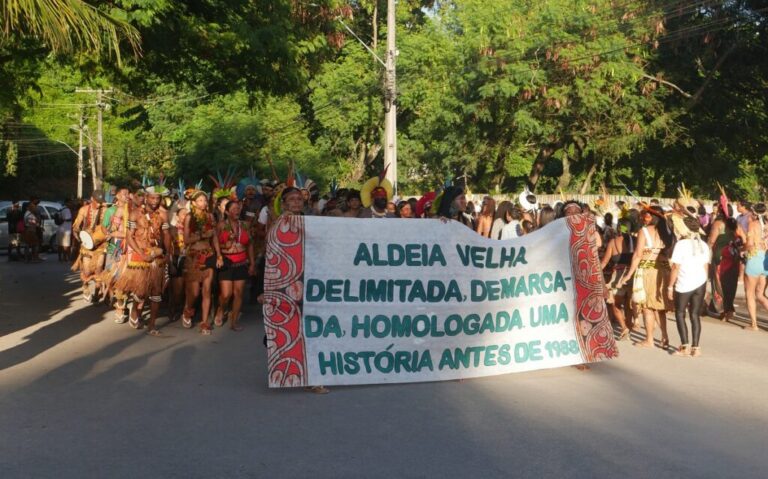
Approximately 2,000 Pataxó people in Bahia, Brazil, risk losing nearly two-thirds of their Aldeia Velha Indigenous Territory due to a legal action brought by the Cosvar Agropecuária agricultural company.
The community, who reclaimed the land in 1998 after decades of expulsion by farmers, currently faces both a potential eviction and increasing pressure from mining projects. The Lula administration initially homologated the Indigenous Territory in 2024, formally recognizing Pataxó rights to the land.
However, Supreme Federal Court (STF) Minister André Mendonça suspended the homologation, arguing that Cosvar Agropecuária had not been compensated for the land before the demarcation. Mendonça’s decision references the “marco temporal” legal thesis, which limits Indigenous land rights to areas occupied or disputed as of 1988, a rule criticized for ignoring past injustices. Beyond the legal battle over land ownership, the Pataxó are also facing a surge in mining applications surrounding their territory.
A survey identified 34 mining requests within an 8-kilometer radius of Aldeia Velha, including some for rare earth minerals. The Pataxó state they were never consulted about these projects, violating both national law and the international Convention 169 of the International Labour Organization, which requires consultation with affected traditional communities. Leaders fear the mining operations will isolate their community and threaten their water sources.
While the eviction order is currently suspended pending appeals, the situation remains precarious for the Pataxó people.