Satellite imagery reveals ancient structures hidden in the Nile Delta
Headline and summary by local AI
Researchers identified a large ancient building complex buried beneath the Nile Delta in Egypt using satellite data and geophysical tools.
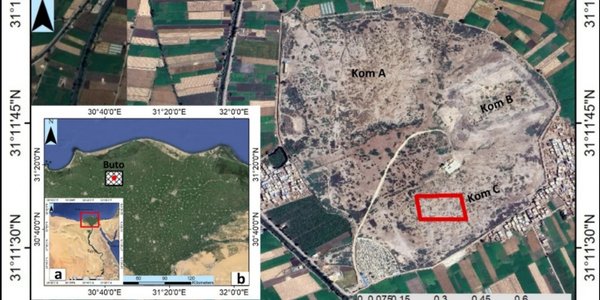
The site, known as Buto, served as a religious center for the cult of Wadżet, a goddess depicted as a cobra. While previous excavations reached the Ptolemaic and Roman periods, high groundwater levels prevented scientists from exploring deeper layers until they employed new technology.
The team used radar images from the Sentinel-1 satellite, operated by the European Space Agency, to find a large oval anomaly measuring approximately 128 by 62 meters. To avoid disturbing the site, the scientists used electrical resistivity tomography to map underground structures. This method revealed hidden layers beneath the surface, including a major mud-brick structure from the Saite period, which dates between 688 and 525 BCE.
At depths of 3 to 6 meters, the researchers found walls and religious artifacts, such as limestone altars and funerary figurines. They also discovered a thick layer of clean sand at a depth of 6 to 7 meters. Abdelaziz Elfadaly, a co-author of the study, said the sand acted as a foundation to distribute weight and manage water drainage in the unstable clay soil. The researchers plan to continue their work to reach even deeper layers.
Selected and summarized by local AI How we work
Discovery: Archaeology, new knowledge of art, culture and history, forgotten history uncovered, something lost restored.