Kākāpō and giant wētā expand habitat in New Zealand
Summary and headline written by AI from the source article. How we work
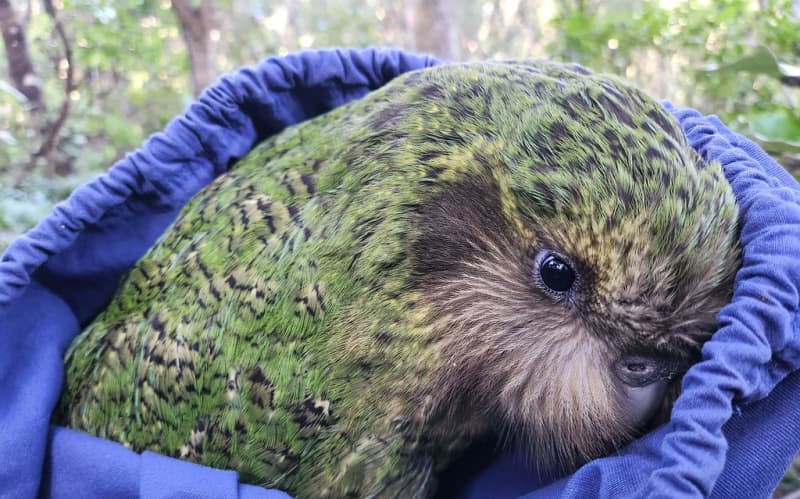
Sanctuary Mountain Maungatautari in Waikato, New Zealand, received two kākāpō and 122 Mahoenui giant wētā as part of ongoing ecological restoration efforts.
The Department of Conservation’s Kākāpō Recovery Programme, Te Rūnanga o Ngāi Tahu, and local Māori groups partnered to release the birds and insects into the 3363-hectare fenced sanctuary.
This builds on a trial begun in 2023 to test mainland habitats for kākāpō, one of the world’s rarest parrots, and follows a successful breeding season that brought the national population to 325. The sanctuary, established 25 years ago, now protects 730 native species through a 47-kilometre pest-proof fence. Multiple bird species, including kiwi, kōkako, and tuatara, have already been reintroduced to Maungatautari through collaborative efforts between the sanctuary, the Department of Conservation, and local iwi (tribes).
The Mahoenui giant wētā were bred at Ōtorohanga Kiwi House in partnership with Ngāti Maniapoto and DOC, adding to a previous translocation of 192 of the insects in 2023. Local Māori groups see the restoration of Maungatautari as vital to their cultural connection to the land, viewing the mountain as an ancestor. Representatives from Ngāti Koroki Kahukura and other iwi work with the sanctuary to guide its direction and fulfill their role as guardians of the environment.
They and sanctuary leaders expressed excitement about the continued evolution of the restored ecosystem.