LSD experiments show increased abstraction without higher creativity
Headline and summary by local AI
Researchers in Belgium and the United States reanalyzed mid-century artworks to determine if LSD enhances artistic creativity.
Mathilde Firmin and Baptiste Barbot, from the Psychological Sciences Research Institute at UCLouvain and Yale University, examined a historical archive of paintings created by professional artists in Los Angeles between 1954 and 1962. The team analyzed 140 verified artworks produced by 20 experienced artists.
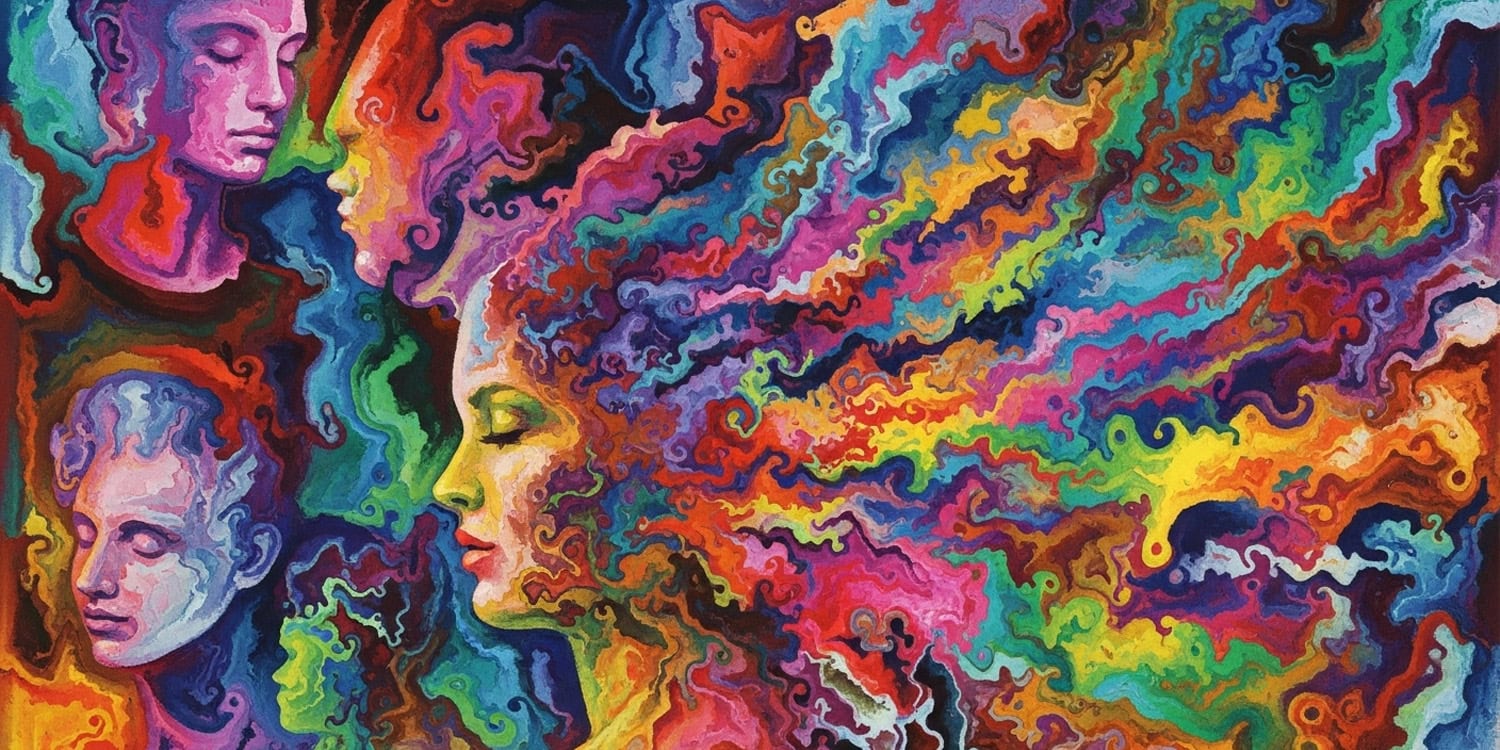
These artists created baseline pieces before receiving a moderate-to-high dose of LSD, then produced new works during the drug's acute effects. Using a panel of six judges from the United States, the United Kingdom, and Belgium, the researchers scored the paintings on creativity, aesthetic appeal, technical quality, and abstraction. The results showed that LSD caused a large shift toward abstraction, as artists moved away from literal subjects toward nonrepresentational shapes and colors.
However, the study found no statistically significant difference in the creativity, aesthetic appeal, or technical quality of the paintings compared to the baseline works. The researchers noted that while the drug may stimulate free-flowing associations, it might also hinder the focused evaluation needed to produce a cohesive, high-quality finished product. The findings contrast with a 1989 report on the same archive that claimed LSD works were more creative.
The authors attribute this difference to the use of modern blind evaluation methods and a random selection of artworks. The study suggests that while psychedelics may heighten a person's subjective feeling of inspiration, they do not necessarily result in objectively more creative finished art.
Selected and summarized by local AI How we work