Villagers sustain water sources through annual ritual
Summary and headline written by AI from the source article. How we work
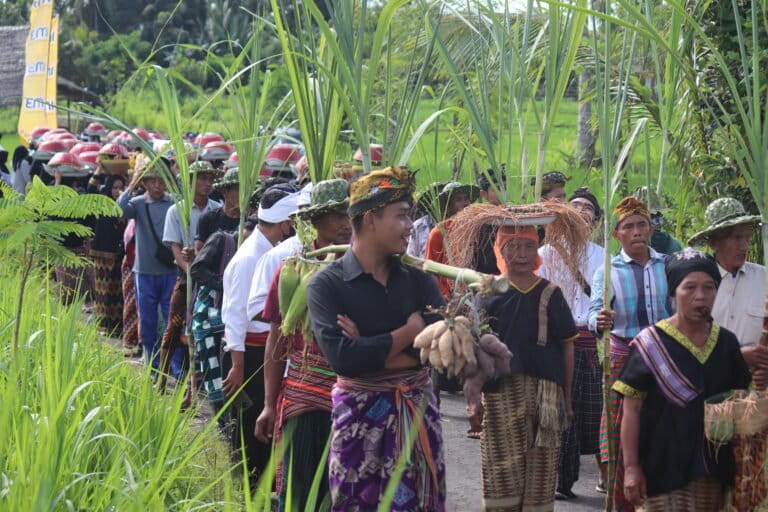
In Kesik Village, East Lombok, Indonesia, residents perform the annual Nunas Nede ritual to welcome the rainy season and maintain their connection to local water sources.
The people of Kesik carry agricultural products and collect water from seven springs, uniting them in a traditional ceremony. This practice is not simply a request for rain, but a reminder that their livelihoods and farms depend on healthy springs. Changing seasons and the climate crisis have increased the ritual’s importance for farmers.
Residents have observed unpredictable rainfall, decreased water levels in some springs, and difficulty determining planting times. As a result, Nunas Nede is now viewed not only as ancestral heritage but as a form of environmental awareness. Beyond prayer, villagers actively maintain the spring ecosystems through communal work. They clean the springs, remove sediment and trash, repair irrigation channels, and plant trees around the water sources.
They also uphold traditional rules, such as prohibitions against cutting certain trees or littering, understanding the link between vegetation and spring health. The ritual serves as a way to pass down ecological knowledge to younger generations, involving children and teenagers in the spring cleaning and storytelling from elders. Amaq Marni, a community elder, explained that the ritual maintains balance in nature and reminds people not to damage their life source, stating, “Water isn’t just for humans.
Water is life for all creatures. If the springs are damaged, the rice fields are damaged, and life disappears with it.”