Coastal residents in Papua use mangrove fruit as a traditional food source
Headline and summary by local AI
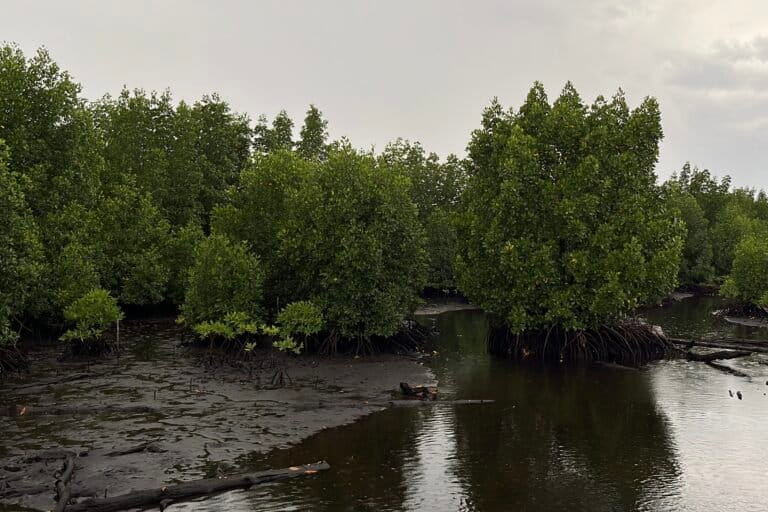
Residents of Desa Ruar in the Biak Numfor Regency of Papua, Indonesia, harvest and process mangrove fruits as a staple food source.
Local people gather fallen fruits from the Bruguiera gymnorrhiza tree, commonly known as aibon, to create a primary food item. This practice dates back to World War II when villagers relied on the forest for survival during the conflict.
While the community maintains a deep historical connection to the mangrove forests and protects them from logging to preserve fish, snails, and medicinal leaves, they face challenges in large-scale consumption. Adel Kafiar, a local resident, explained that the long processing time and limited processing equipment mean the community only eats the fruit during specific moments. The Biak BioDiscovery 2026 expedition team conducted a study between August and September to examine how coastal communities utilize these mangrove fruits.
The team, which included students from Universitas Padjadjaran and several partner organizations, confirmed that the people of Biak possess extensive local knowledge regarding the fruit. The research highlighted that while the potential for mangrove fruit as a food source is abundant in the coastal region, the community currently lacks sufficient facilities to process the fruit efficiently.
Selected and summarized by local AI How we work
Belonging: Community bonds, rootedness, and living cultural practices and heritage.