René Laënnec invented the stethoscope after examining a woman
Summary and headline written by AI from the source article. How we work
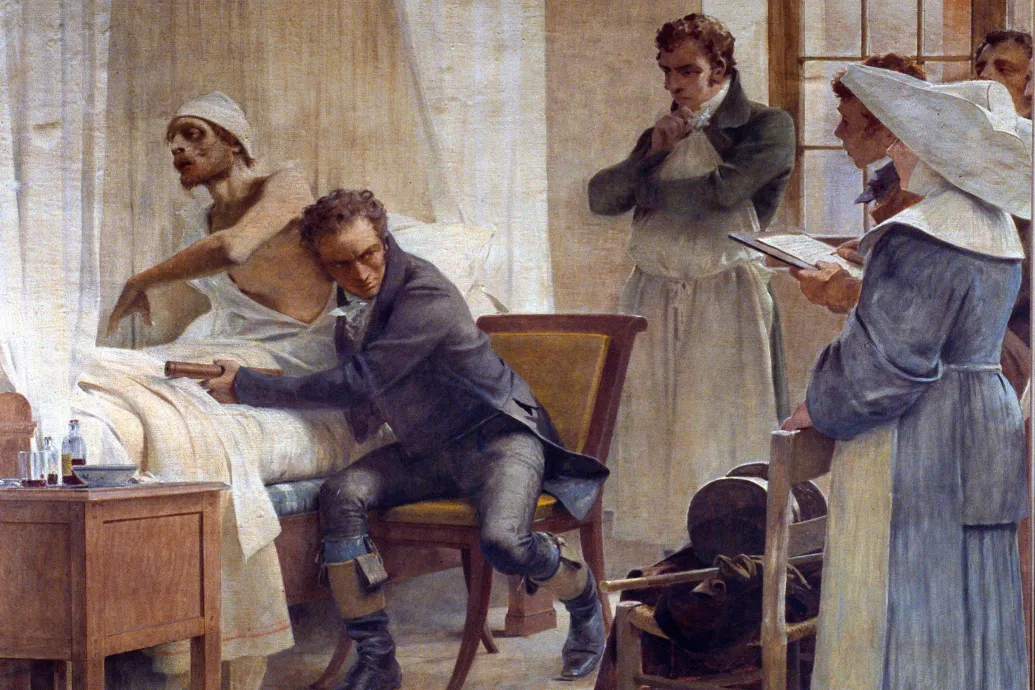
In 1816, French physician René Laënnec created the first stethoscope after struggling to examine a young, overweight woman with a heart condition.
Traditional methods of listening to a patient’s body, placing an ear directly on the chest, were uncomfortable for both doctor and patient, posed a risk of infection, and proved difficult with heavier patients. Laënnec remembered seeing children play with a wooden tube, transmitting sound over a distance, and applied the principle to his medical challenge.
He initially rolled a paper sheet into a cylinder to connect the patient’s chest to his ear, discovering he could hear the heartbeat more clearly than before. Laënnec experimented with different materials, wood, paper, and sugarcane, to optimize sound transmission, eventually crafting a 25-centimeter-long wooden cylinder with a funnel-shaped attachment. His musical skills aided his work, as he had experience crafting instruments.
Laënnec used his new device to identify symptoms and correlate them with findings from post-mortem examinations, allowing him to accurately describe conditions like pneumonia, tuberculosis, and cirrhosis. He published his findings, gaining followers throughout Europe who further developed the instrument, experimenting with materials like ivory and brass. Although some doctors doubted its effectiveness, the stethoscope revolutionized diagnostics and remains a symbol of medicine today.