A 5 ton gold Buddha statue was hidden under terracotta for 200 years
Headline and summary by local AI
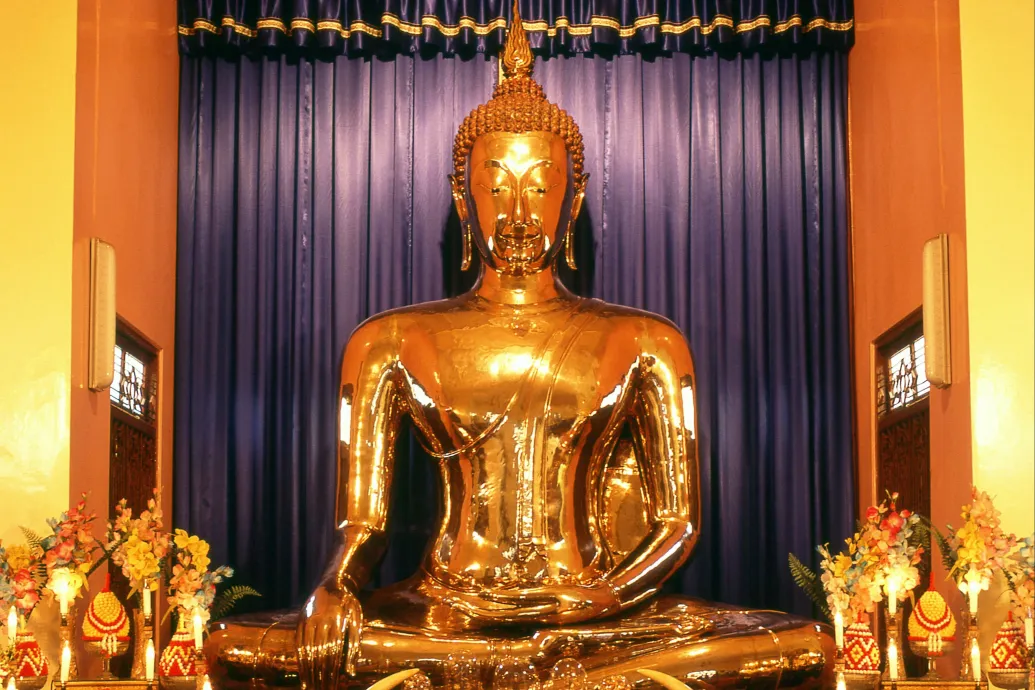
A massive gold statue of Buddha, known as Phra Phuttha Maha Suwan Patimakon, was revealed to be made entirely of 18-karat gold after its terracotta coating cracked during a move in Bangkok.
Experts believe the statue originated in the Sukhothai Kingdom between the 13th and 14th centuries. The sculpture features an egg-shaped head, a characteristic style of that era that distinguishes it from the rounder heads seen in Indian Buddha statues.
When the Sukhothai Kingdom began to decline in the 15th century, people moved the statue to the city of Ayutthaya. To protect its value, they covered the gold surface with terracotta. The statue remained in Ayutthaya until 1767, when Burma, now known as Myanmar, attacked the Thai Kingdom. The sculpture was moved again and eventually ended up in Bangkok. It stayed in a tin-roofed shed until the mid-1950s.
During a relocation to a different part of the city, the terracotta coating broke, revealing the underlying gold. The discovery occurred in 1995, which corresponded to the year 2500 in the Buddhist calendar. People removed the remaining terracotta and documented the process with photographs. The statue, which stands over 3 meters tall, is now displayed at the Wat Traimit temple in Bangkok. It entered the Guinness World Records in 1991 as the most valuable religious artifact.
Selected and summarized by local AI How we work


