Chinese philosophy reinterprets tradition to address modern social dilemmas
Headline and summary by local AI
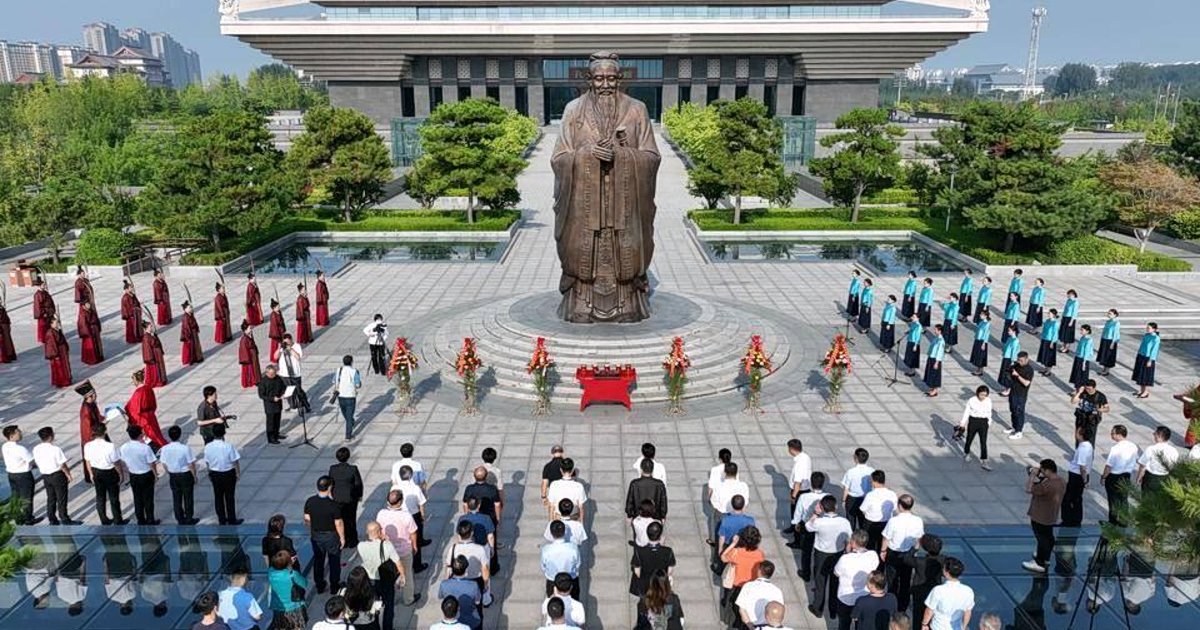
Dimitra Amarantidou, an Associate Professor of Chinese Philosophy at the Institute of Confucian Studies at Shandong University, explains how Confucianism adapts to contemporary Chinese society.
She argues that Westerners often struggle to understand Chinese thought because they view the self as an autonomous individual, whereas Chinese philosophy views the self as a porous entity interconnected with others through "qi," a vital energy that permeates all reality.
Amarantidou notes that Chinese aesthetics differ from Western forms by focusing on bodily experience and the practical relationship between humans and nature. She references the scholar Li Zhehou, who linked the concept of "mei" (beauty) to both culinary enjoyment and shamanic rituals. This perspective views the spiritual and the material as a single world, where the sacred manifests within the everyday. The professor describes how Confucian values merged with socialism during the evolution of the Communist Party.
While Mao Zedong initially rejected imperial traditions during the Cultural Revolution from 1966 to 1976, later phases integrated Confucian hierarchies and values like integrity and harmony into modern governance. Today, these traditions face new challenges, such as the tension between traditional family structures and modern desires for individual autonomy. Regarding technology, Amarantidou observes a distinction between the United States and China.
While the United States pursues Artificial General Intelligence, China focuses on integrating robots into daily life to assist with practical tasks like elderly care. This approach prioritizes practical outcomes and the mediation of traditional filial piety through modern technology.
Selected and summarized by local AI How we work
Discovery: Archaeology, new knowledge of art, culture and history, forgotten history uncovered, something lost restored.