Spanish cooperative provides affordable housing alternative to private markets
Headline and summary by local AI
The non-profit cooperative Sostre Cívic is developing a right-to-use housing model in Barcelona to address Spain's housing crisis.
This model allows members to have a permanent right to live in a home while the cooperative owns the property. The approach aims to offer a middle ground between traditional renting and buying, which the organization says is an outdated system responsible for the current crisis. The cooperative uses a mix of public and European funding to build these homes.
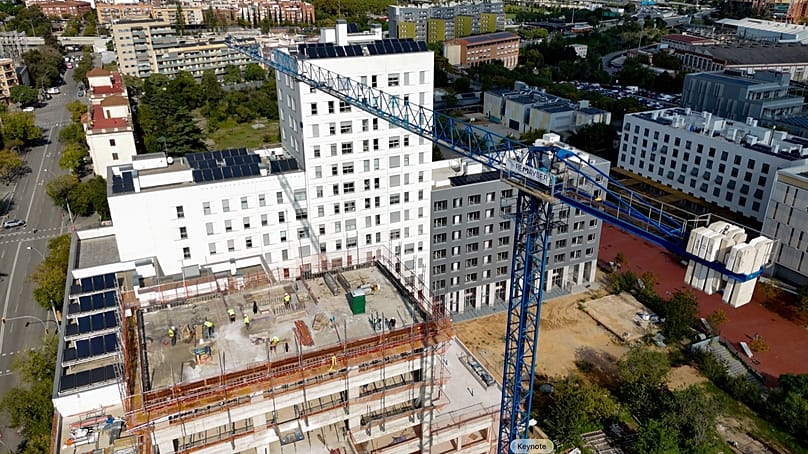
For the Ca l’Ordit project, the Barcelona City Council provided land for free, while EU NextGeneration funds contributed nearly €3 million. The Council of Europe Development Bank also provided low-interest financing. Because these projects operate without profit margins, residents can secure homes by contributing between €12,000 and €24,000. These residents then pay monthly fees for maintenance and taxes that are estimated to be up to 40% lower than market rents.
Residents of these developments participate in collective management and share resources. At the Cirerers building, inhabitants use shared kitchens, a library of things, and workshops for carpentry and bicycles. While the model provides a viable path for low-income residents, Sostre Cívic notes that the local government has prioritized for-profit partnerships over cooperative housing. In the last four years, the Barcelona City Council allocated land for 1,000 rental homes with for-profit companies but only 100 homes for cooperatives.
Selected and summarized by local AI How we work


