Ötzi the Iceman: 35 years of scientific discovery
Summary and headline written by AI from the source article. How we work
In the Ötztal Alps, on the border between Italy and Austria, scientists continue to uncover new details about Ötzi, a man who lived around 5200 years ago.
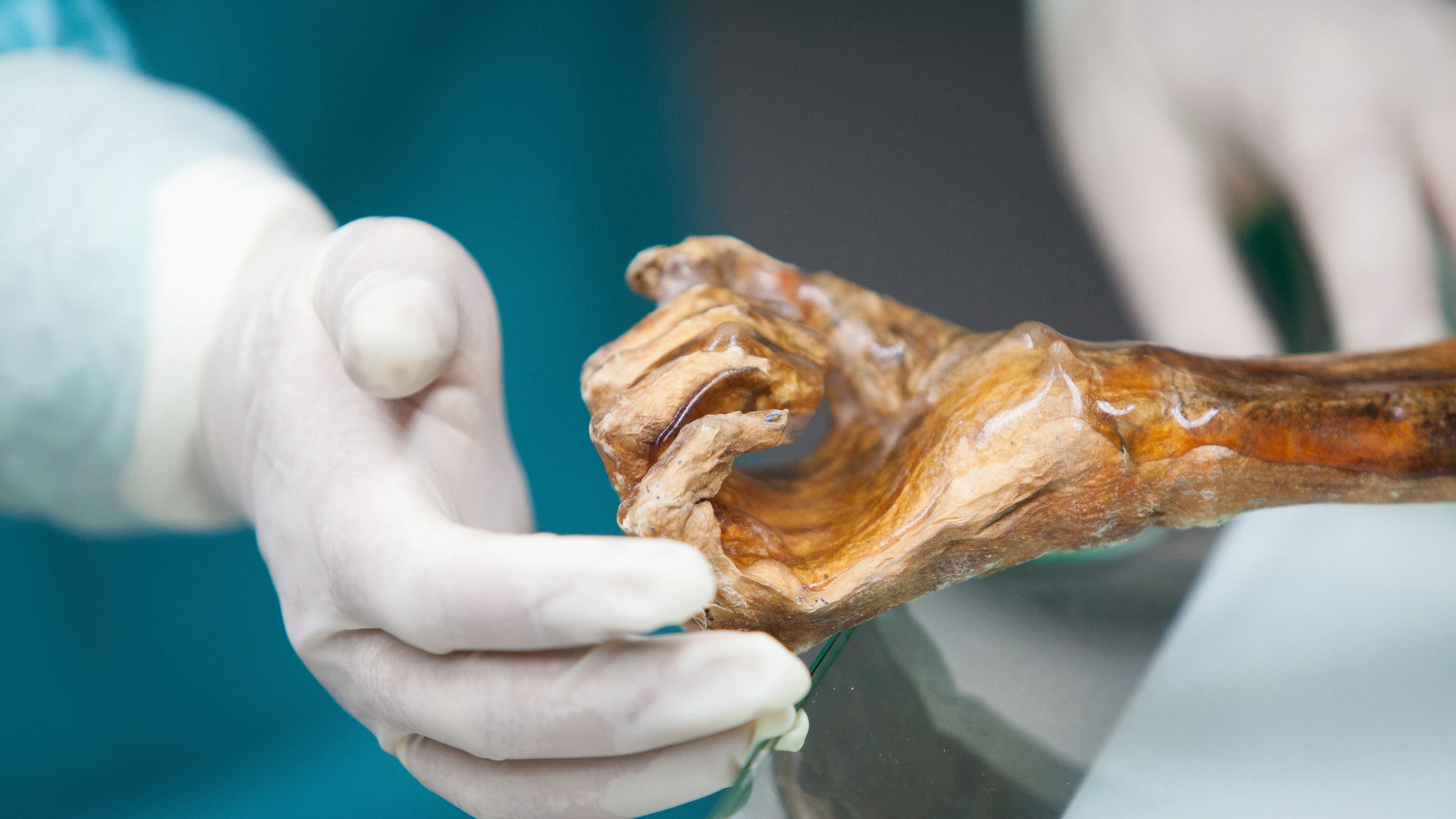
Hikers discovered Ötzi’s remarkably preserved body in 1991, and since then he has become one of the most studied human remains in history. Initial assessments suggested Ötzi might have been a shepherd who froze to death, but researchers later found a flint arrowhead lodged in his shoulder, proving he died from violence.
Over time, analysis of Ötzi’s remains revealed more about his life and origins. Genetic studies initially indicated a connection to people from the Eurasian Steppe, but later, more accurate sequencing showed he was primarily descended from early farmers from Anatolia, with a small percentage of hunter-gatherer ancestry. Scientists also learned Ötzi had brown eyes, was lactose intolerant, and carried a parasite in his gut. Recent research has even challenged previous understandings of his death.
While originally believed to have died immediately after being shot, new forensic studies suggest Ötzi may have survived for hours with the arrow in his back and moved to where he was eventually found. Despite extensive study, many details about Ötzi remain unknown, including his actual name, language, and the specifics of his culture, the Remedello culture, which used copper but lacked writing.