Bat behavior research informs the study of human language evolution
Headline and summary by local AI
Researchers at the Museum für Naturkunde and Humboldt-Universität zu Berlin study the acoustic communication of bats in the forests of Mittelamerika.
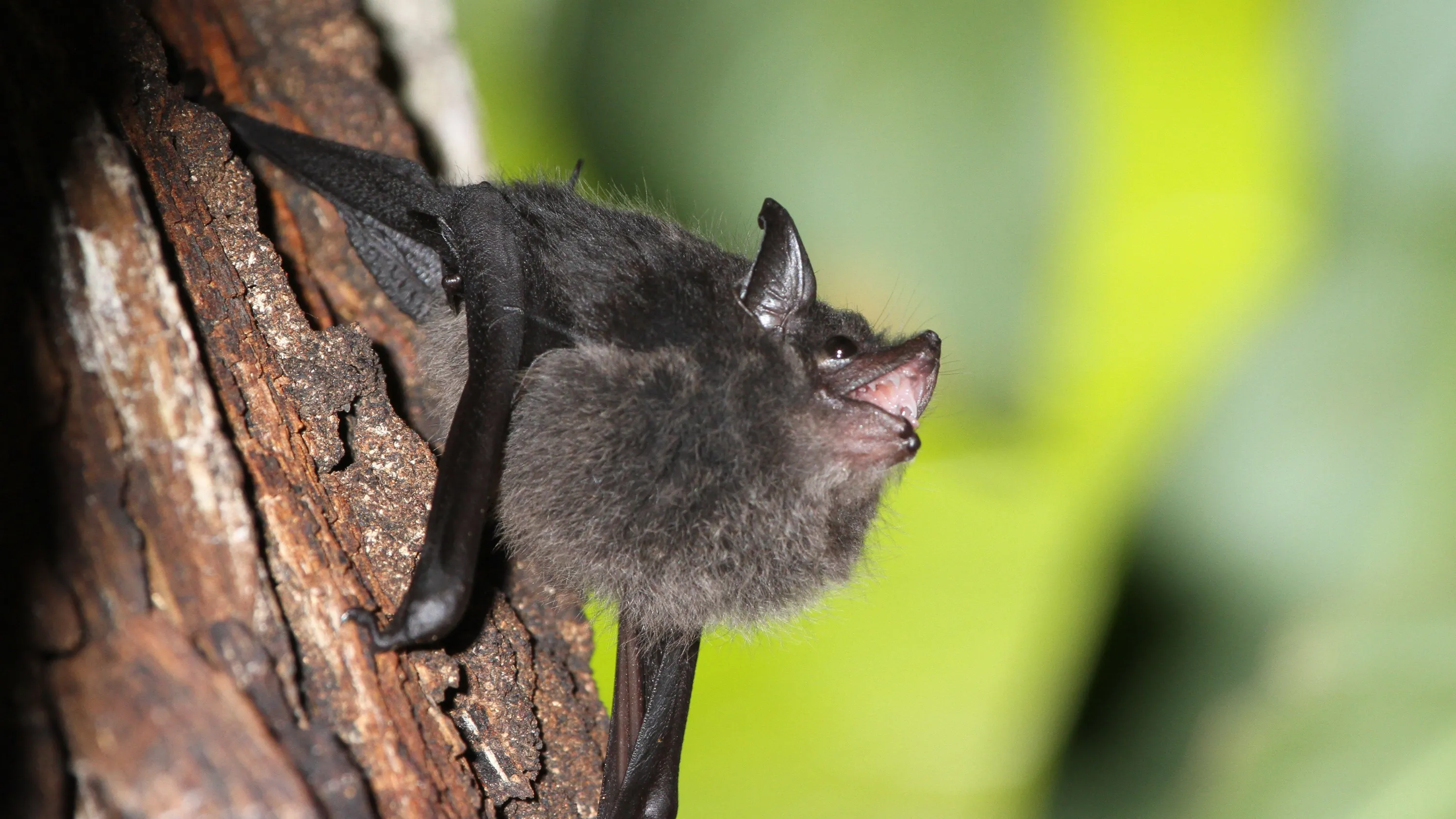
The team observes how these animals interact to understand the biological foundations of vocal learning. By studying how animals produce, learn, and combine sounds to convey complex thoughts, the scientists aim to identify which linguistic capabilities existed in our ancestors. The researchers focus on the Große Sackflügelfledermaus, a bat species that remains in colonies year-round.
They found that males develop learned song dialects to defend territories and attract females. Females show a preference for the specific dialects they grew up hearing, suggesting that early auditory experiences shape social preferences. The study also revealed that young bats babble and combine immature syllables with adult sounds, a process that mirrors human child language acquisition and relies heavily on social interaction with mothers. The team also conducted experiments to see how bats interpret specific sounds based on context.
When they played a recorded distress call of a group member, the bats only reacted if the sound appeared to come from a plausible location. This demonstrates that the bats recognize individual voices and require a realistic situation to respond appropriately. These findings suggest that sound alone does not convey meaning; social relationships and situational knowledge are necessary for true communication. To scale this research, the scientists are using artificial intelligence to analyze massive amounts of recorded data.
However, they noted that AI often fails to correctly categorize sounds because it cannot perceive the social context or the intended function of a call. The researchers plan to combine AI analysis with metadata about the animals' social lives and behavioral reactions. This approach could eventually help identify stress markers for animal welfare and assist in conservation efforts by monitoring social behaviors over large areas.
Selected and summarized by local AI How we work
Discovery: Archaeology, new knowledge of art, culture and history, forgotten history uncovered, something lost restored.