Scientists identify fossilized dinosaur blood cells in Brazil

Headline and summary by local AI
An international team of researchers identified mineralized red blood cells within a 115 million year old dinosaur bone in Brazil.
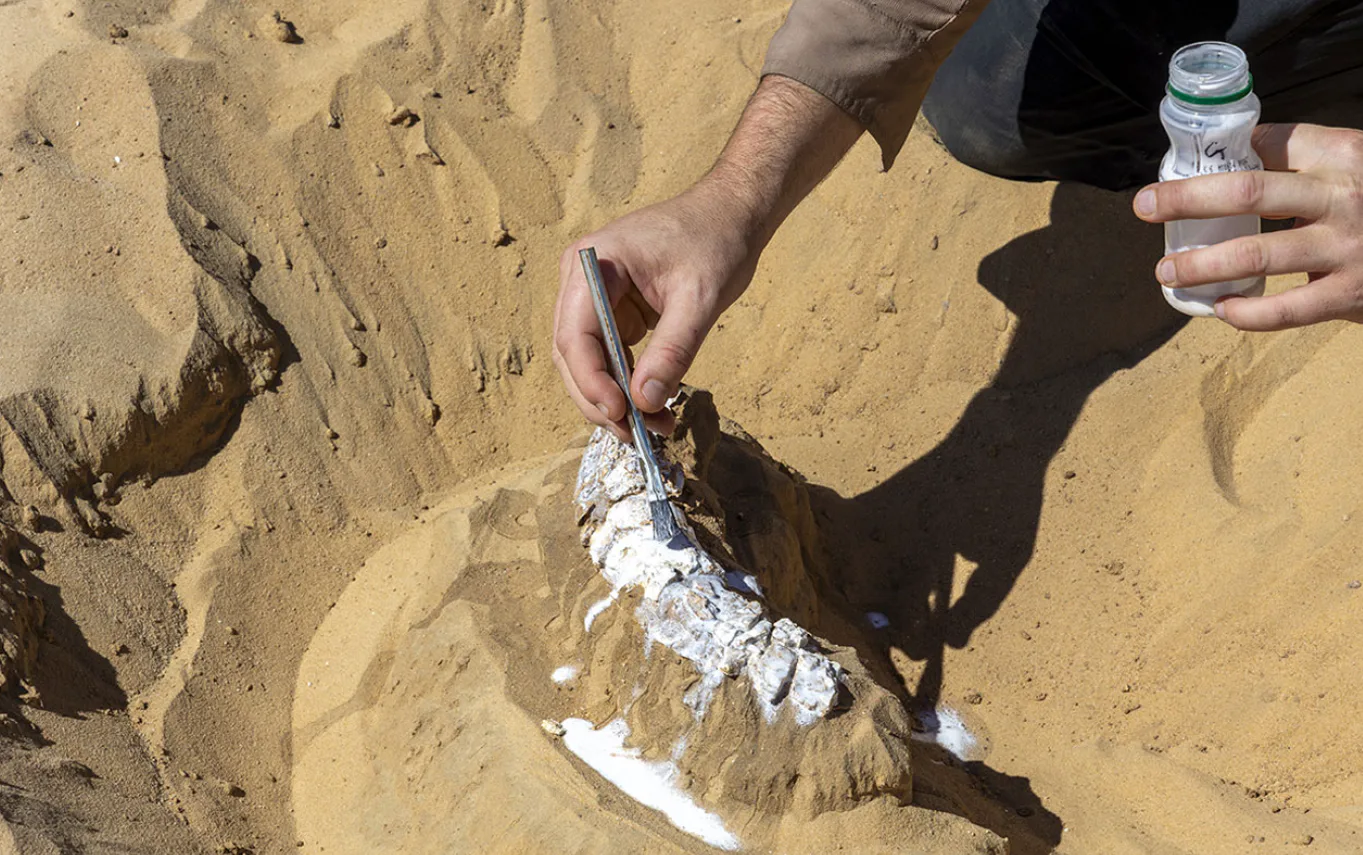
The team published their findings in the journal Proceedings of the National Academy of Sciences (PNAS) in November 2026. They used lasers and electron microscopes to examine the fossil of an Aratasaurus, a small dinosaur from the theropod lineage. The researchers found the blood cells inside vascular canals, which are the channels that once housed blood vessels.
They identified heme, an organic molecule that transports oxygen, within these structures. While other paleontologists have reported mineralized blood traces before, this team claims to be the first to formally prove their authenticity by locating them in the correct anatomical position. Some scientists remain skeptical about the discovery. Mary Schweitzer, a researcher at the North Carolina Museum of Natural Sciences, described the data as intriguing but not fully convincing.
She noted that the fossilized cells lack a nuclear bulge typical of certain vertebrate red blood cells. The study authors argue that the mineralization process over millions of years likely altered the shape and structure of the cells. The discovery could open a new field of study regarding the preservation of organic matter from ancient animals.
Researchers believe this could help identify more than 3000 currently known dinosaur species and provide insights into dinosaur physiology, such as their metabolic rates and internal body temperatures. However, Romain Amiot, a researcher at the CNRS, clarifies that the DNA is too old to recreate dinosaurs through cloning.
Selected and summarized by local AI How we work