Paris observatory opens doors to public for heritage festival
Summary and headline written by AI from the source article. How we work
In Paris, France, the Paris Observatory, the world’s oldest active astronomical observatory, opened its doors to around thirty visitors on September 19 as part of the Festival du Monde.
Founded in 1667, the observatory usually keeps its grounds closed to the public, preserving a scientific and architectural heritage built over nearly four centuries. Visitors like Gabriel Robert, from Quebec, expressed curiosity about the normally inaccessible site and its contributions to astronomy and astrophysics.
The group toured the observatory’s central building, a historical monument designed by Claude Perrault. Inside, they saw the Paris Meridian, first mapped in stone on June 21, 1667, a precursor to the Greenwich Meridian. Astrophysicist and Observatory President Philippe Stée explained that a brass line on the floor marks the Paris Meridian, originally traced by astronomer Jean-Dominique Cassini and completed by his son, Jacques Cassini, around 1729-1730.
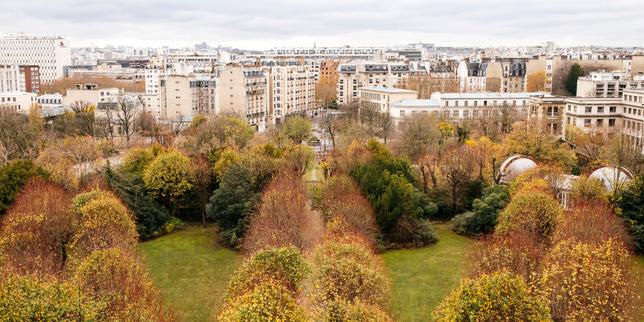
This instrument allowed scientists to measure the Earth’s tilt and its changes over time. The visit continued to the observatory’s rooftop, offering an unusual view of Paris. There, visitors saw the Arago dome, housing a nine-meter telescope commissioned by astronomer François Arago in the 19th century.
Beyond the buildings and instruments, the observatory holds a collection of historical scientific items, including lunar drawings by Cassini, a sextant belonging to La Caille, and archives related to the metric system, that Philippe Stée says are currently at risk and require funding for conservation and restoration.


