EU aviation fuel mandate drives uptake, faces supply challenges
Summary and headline written by AI from the source article. How we work
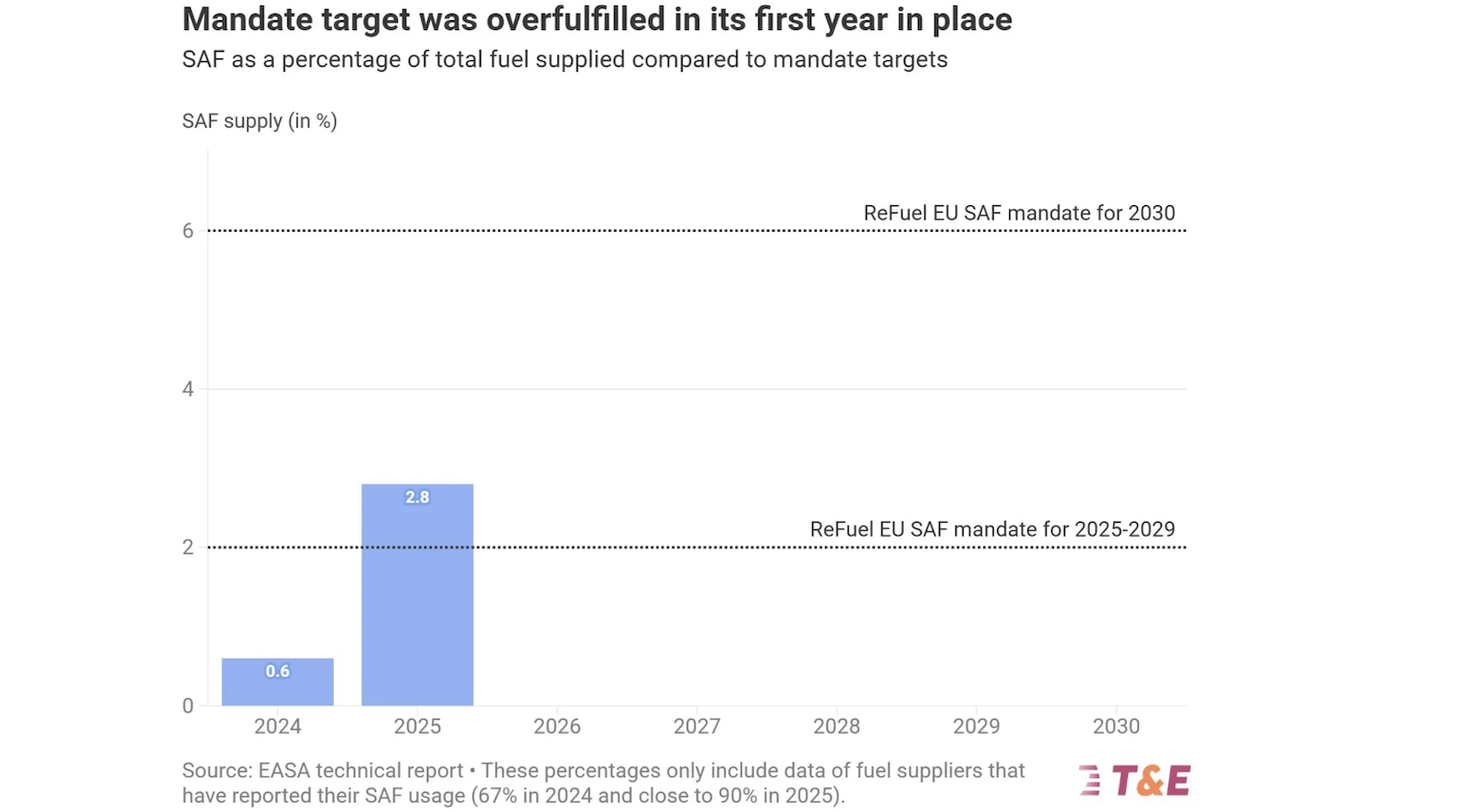
In 2025, European Union aviation supplied 1.1 million tonnes of sustainable aviation fuel (SAF) at its airports, exceeding the initial 2% mandate set by the ReFuelEU regulation.
The European Union Aviation Safety Agency (EASA) assessed the first year of the mandate and found that it successfully increased SAF usage from 0.6% in 2024 to 2.8% in 2025. However, the report also revealed that the current SAF supply relies heavily on potentially problematic sources like used cooking oil and animal fats.
Currently, around 80% of SAF in the EU comes from processed waste oils and fats, raising concerns about fraud and limited availability. The use of animal fats and palm oil mill effluent is also increasing, which could simply move emissions to other industries instead of reducing them overall. Furthermore, 85% of the feedstocks used to create SAF are imported into the EU, primarily from China, making Europe dependent on external sources.
EASA identified approximately 60 projects developing synthetic aviation fuels (e-SAF) in Europe, but none have yet secured final investment decisions. To address this, the agency recommends maintaining the ReFuelEU framework, incentivizing investment in e-SAF production through mechanisms like auctions, and diversifying SAF feedstocks to reduce reliance on imported waste oils. The European Commission has proposed phasing out support for used cooking oil-based SAF from 2030 to encourage a shift towards more sustainable alternatives.