Ethiopia transforms agriculture, eyes food sovereignty
Summary and headline written by AI from the source article. How we work
In Ethiopia, farmers are dramatically increasing wheat production, moving the country from a major importer to a potential exporter.
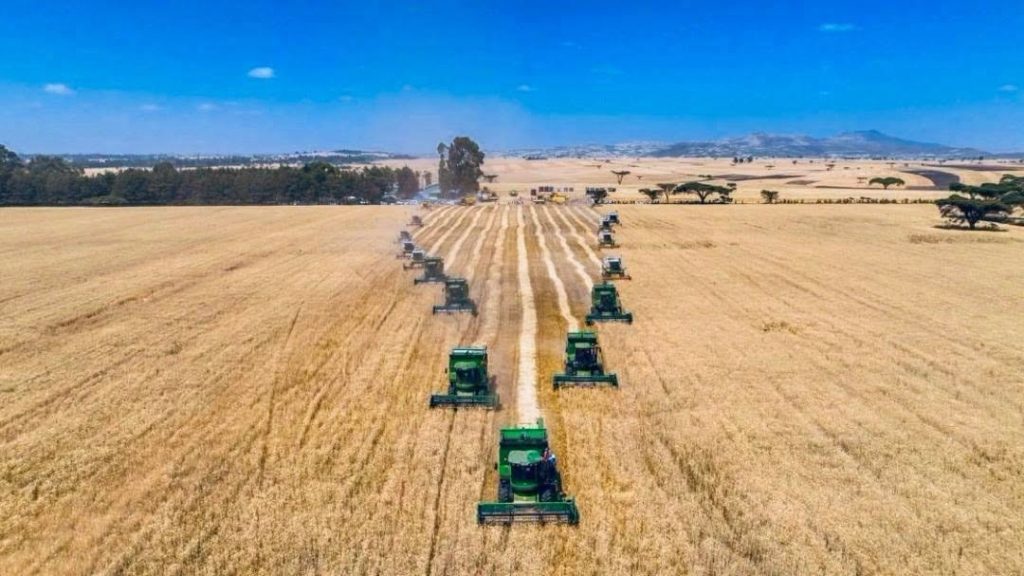
Until recently, Ethiopia was known for food shortages and reliance on international aid. Now, wheat cultivation has expanded from 20,000 hectares in 2020 to 3.5 million hectares in 2025, yielding 280 million quintals in 2025. This growth is driven by irrigation, heat-tolerant crop varieties, and improvements in seed, soil management, and mechanization.
The country replaced 2.6 million quintals of imported wheat annually, saving approximately 1 billion US dollars in foreign exchange. Beyond wheat, overall agricultural output rose from 41.7 million tons to around 150 million tons over seven years, with cluster farming reaching 9.5 million farmers. Initiatives like “Bounty of the Basket” are expanding livestock, poultry, and fisheries alongside crops, increasing milk production from 5.8 billion litres in 2022 to 11.7 billion litres in 2026.
Ethiopia is also focusing on environmental restoration through the Green Legacy initiative, which has planted 56.8 billion seedlings over eight years. The Food and Agriculture Organization (FAO) awarded Prime Minister Abiy Ahmed its Agricola Medal in 2024 for his contributions to rural development and food self-sufficiency, citing Ethiopia’s wheat program as a model for other African nations.
The African Development Bank has also praised Ethiopia’s progress, and the country is now sharing its experiences with other African countries to promote food sovereignty across the continent.