Researchers map ancient Silk Road fragrance trade using modern technology

Headline and summary by local AI
Experts from multiple institutions in China published a comprehensive study to map the historical trade routes of imported incense and spices.
The book, titled Research on Imported Fragrances Excavated in China, will be released by Fujian Science and Technology Publishing House in December 2025. The research team includes specialists from the China Academy of Chinese Medicine, Quanzhou Maritime Silk Road Museum, Anhui University of Chinese Medicine, and the Institute of Archaeology of the Chinese Academy of Social Sciences.
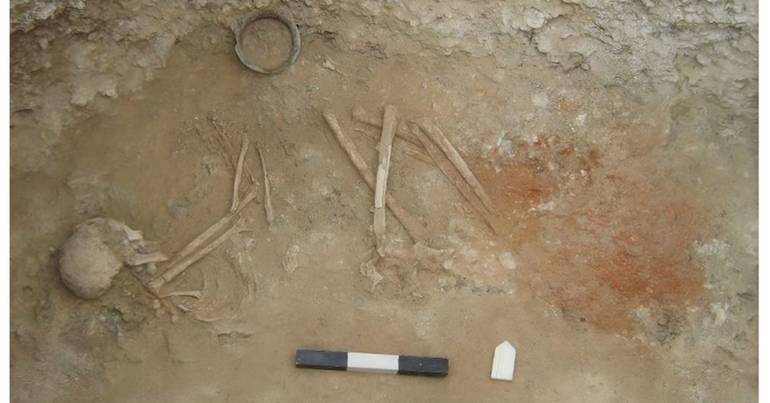
The researchers used a multi-disciplinary approach to analyze physical artifacts found at major historical sites, such as the Nanyue King's Tomb from the Western Han Dynasty and the Tang Dynasty underground palace at Famen Temple. By combining archaeological excavation with modern chemical analysis, including gas chromatography and mass spectrometry, the team identified the origins and distribution paths of these substances.
This work fills a previous academic gap where researchers primarily relied on written texts rather than physical evidence to track trade. The findings show that the import of foreign spices peaked during the Song Dynasty, with records identifying 53 specific types of imported fragrances. While trade declined during the Ming and Qing dynasties, these materials became a permanent part of the Chinese herbal medicine system.
The study successfully resolved long-standing academic disputes regarding the origins of specific items like frankincense and storax. The authors aim to turn these archaeological remains into resources for modern medicine, health foods, and cosmetics.
Selected and summarized by local AI How we work