Uzbekistan expands climate resilient farming and water management projects
Headline and summary by local AI
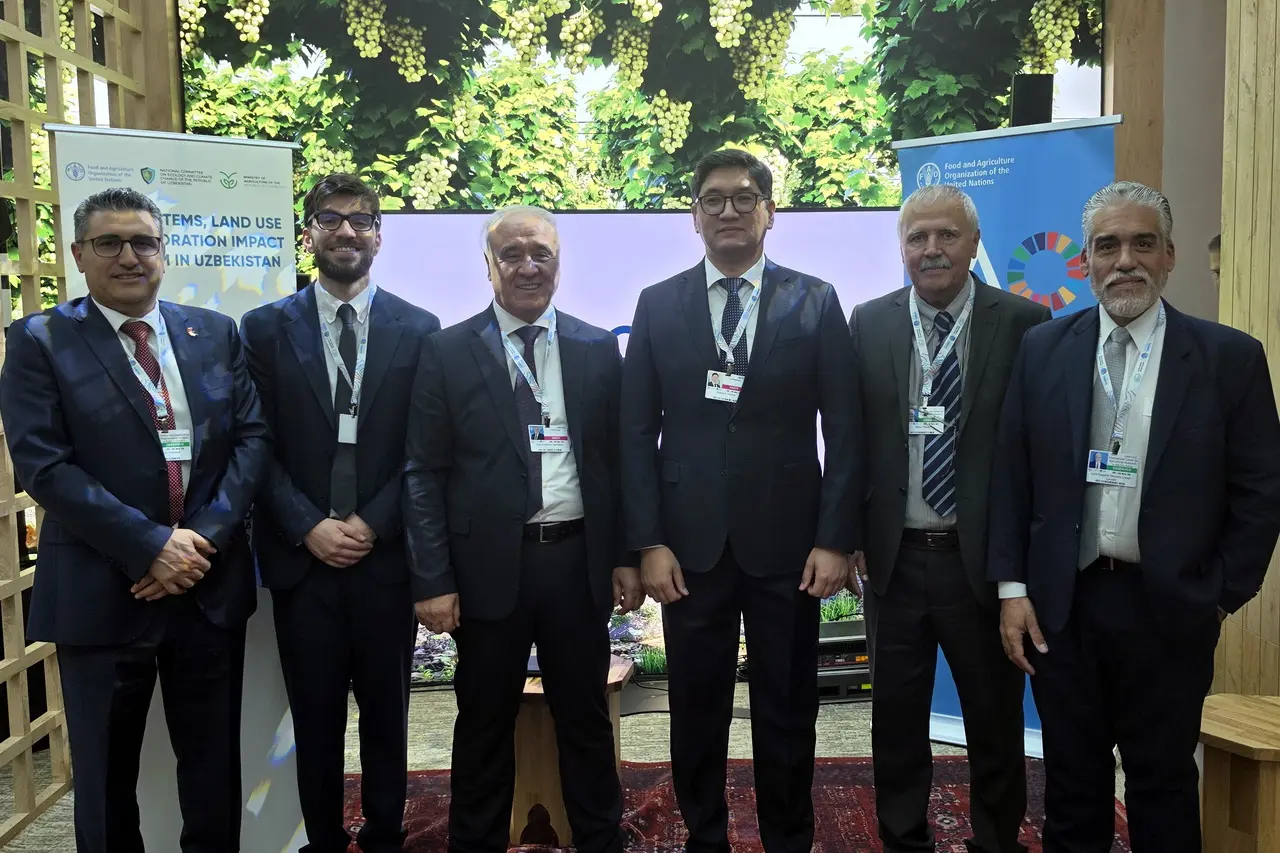
The Food and Agriculture Organization of the United Nations and Uzbek authorities presented results from the FOLUR Uzbekistan project at the 31st UN Climate Change Conference.
The initiative focuses on helping rural communities adapt to water scarcity and land degradation through sustainable agricultural practices. Project leaders reported that the area using soil conservation methods grew from 60 hectares of demonstration plots to approximately 4,940 hectares. These methods include zero tillage and crop diversification.
Researchers found that zero tillage allowed water to infiltrate the soil at a rate of 27mm per hour, which is significantly higher than the 16mm per hour rate seen in conventional farming. The project also implemented creative water storage and land restoration techniques. In the Kashkadarya Region, workers built an artificial ice reservoir called an Ice Stupa that stored 800 cubic metres of water to support 60 households during dry periods.
In the Kamashi district, workers planted 16,000 seedlings across 90 hectares to restore degraded land, achieving an 80% survival rate. Experts also shared findings on the dairy sector to help small producers reach markets. A survey of 105 households revealed that farmers in the Yangibazar district are willing to join a specialized milk collection center or cooperative if the government provides the necessary infrastructure.
Selected and summarized by local AI How we work
Solutions: Technology, policy and initiatives already in use against a real problem, with results to show.
More in Solutions

Uganda integrates digital tools to track medicine side effects in HIV treatment
monitor.co.ug · 13 Nov 2026

Malaysian government finds lower income groups benefit most from fuel subsidy
freemalaysiatoday.com · 7 Nov 2026

Isle of Man to provide free period products to low income households
bbc.co.uk · 7 Nov 2026