Almaty exhibition highlights women’s heritage and memory
Summary and headline written by AI from the source article. How we work
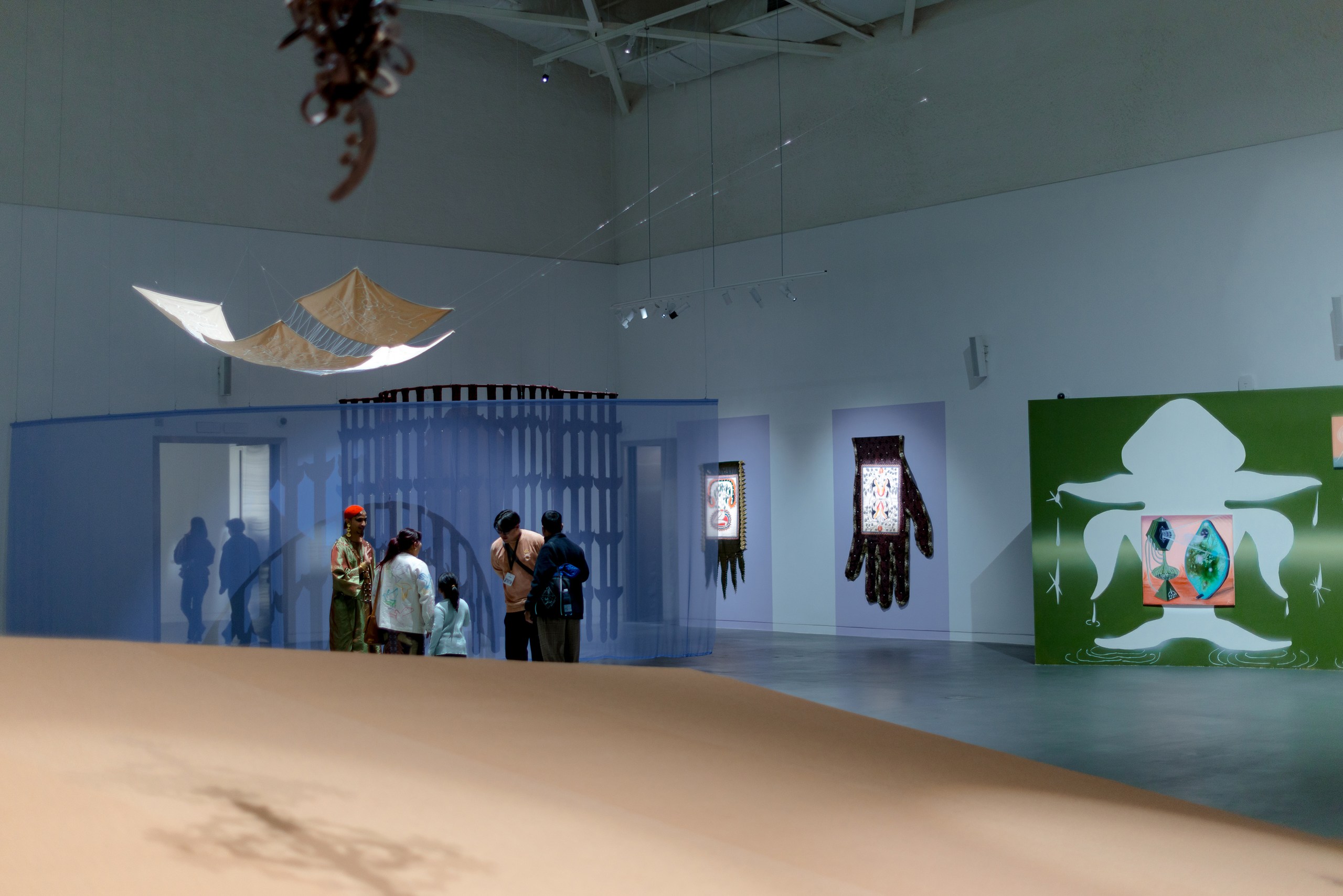
An international exhibition, “Himoya: Matrilineal Energies, Oracular Kin,” opened at the Tselinny Center of Contemporary Culture in Almaty, Kazakhstan on Oct. 15, featuring 21 artists and thinkers from Central Asia and around the world.
The exhibition, curated by Natasha Ginwala, explores women’s heritage, ancestral knowledge, and cultural memory through contemporary art, running until April 4, 2027.
It includes new works, installations, a research program, workshops, and educational events, all responding to the history of the building as a former Soviet cinema. The exhibition’s name, “himoya,” signifies protection, care, and safeguarding vulnerability in languages like Uzbek, Arabic, Azerbaijani, and Sanskrit. Artists use sculpture, sound, installation, and performance to demonstrate how knowledge and traditions are passed down through generations, particularly within families.
The project also investigates how historical events, repression, and loss have impacted cultural memory in Central Asia and beyond. Uzbek artist Aziza Kadyri presents “Iron Mother,” an installation based on her grandmother’s experience as the first female director of the Tashkent TV Tower. The artwork allows visitors to control how Umida’s story is broadcast, highlighting the challenges women face in gaining recognition for their achievements.
Colombian artist Ana María Millán collaborated with local participants in Almaty to create a new animated work exploring themes of protection, autonomy, and reimagining traditional narratives. South Korean artist Haegue Yang’s audio installation, recorded in Kazakh, Russian, English, and Koryo-mar, combines Korean myth with Japanese literature to explore themes of solitude, endurance, and invisible labor. The exhibition draws on Tengrian traditions and Turkic mythology, viewing artistic practice as a way to preserve memory and reinterpret inherited stories.