Kazakhstan snow leopard population Doubles as scientists track Altai
Headline and summary by local AI
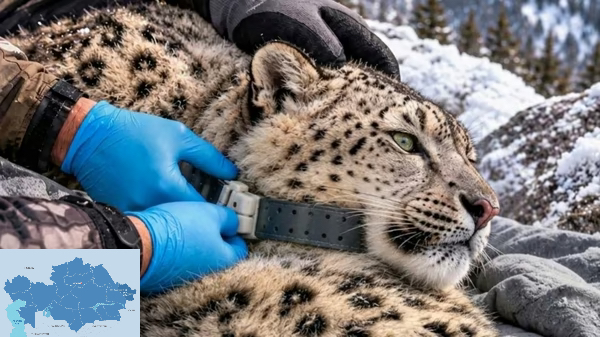
Scientists in Kazakhstan fitted a snow leopard named Altai with a satellite collar in the Southern Altai region.
The Forestry and Wildlife Committee of the Ministry of Ecology and Natural Resources reported that this marks the first time researchers have performed such tracking in the Southern Altai area. The collar allows experts to monitor the movements of the predator, map its routes, and define its home range without needing to enter its remote habitat frequently.
The tracking program has already influenced environmental policy. Officials use the gathered satellite data to justify and establish the boundaries of protected areas. Currently, snow leopards in Kazakhstan live within nine specially protected natural areas, which cover about 70% of the species' range in the country. The ministry plans to continue expanding this network of protected territories based on the new data.
President Kassym-Jomart Tokayev highlighted the success of these conservation efforts at the 17th Conference of the Parties to the Convention on Biological Diversity in Yerevan, Armenia. He noted that the snow leopard population recovered from a critically low level of 80 to 90 animals in the 1990s to a current estimate of between 190 and 200. The government also shared its experience using animal movement data to plan infrastructure and protect biodiversity.
Selected and summarized by local AI How we work


