Amur tigers adapt to life in Kazakhstan Nature Reserve
Headline and summary by local AI
Kazakhstan and Russia are working together to restore the Amur tiger population to its historical range in Central Asia.
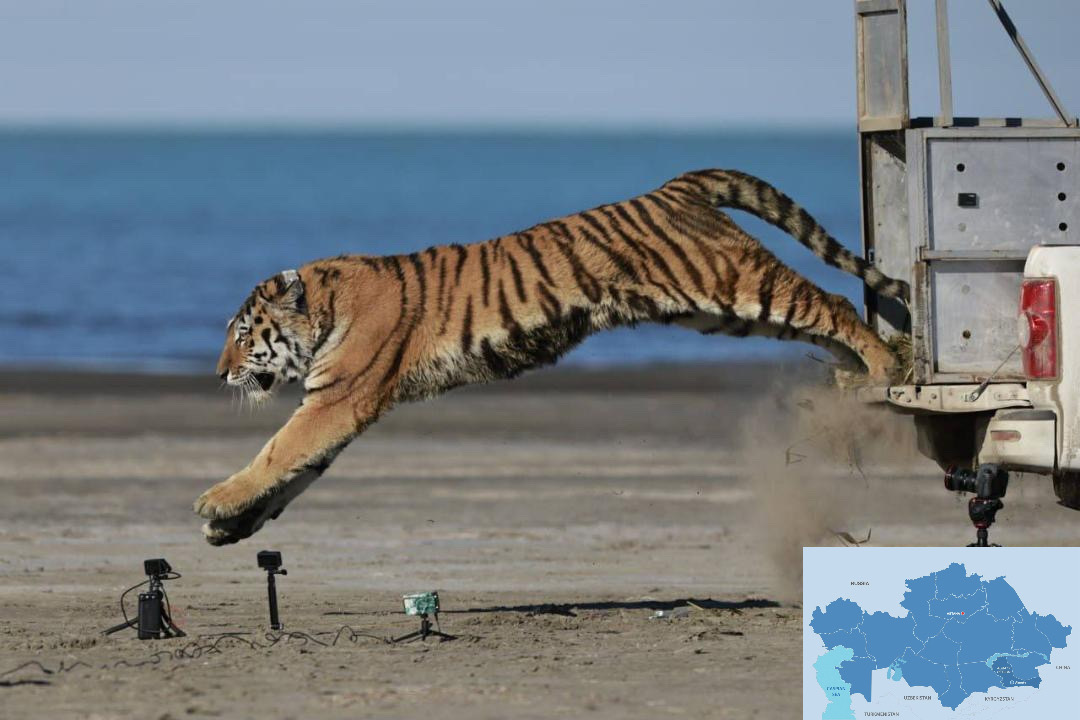
The Amur Tiger Center released two tigers into the Ile-Balkhash Nature Reserve to begin this restoration process. Sergey Aramilev, the director general of the Amur Tiger Center, reported that both the male tiger named Amur and the female tiger named Umit are healthy and staying within their assigned areas.
The tigress has already begun hunting wild boar, Bukhara deer, and a wolf. Experts are using GPS collars to monitor the tigers' movements, noting that the female travels between seven and 15 kilometers per day. Her behavior currently mirrors the patterns of Amur tigers living in the Khabarovsk and Primorye regions of Russia. To support the predators, officials introduced more than 300 deer and kulans, a type of wild ass, into the reserve.
While the goal is for the two tigers to form a breeding pair, Aramilev noted that their compatibility is not guaranteed. The project will be deemed a success if the female produces offspring. Kazakh specialists believe the territory could support up to 50 tigers, though Russian experts suggest a sustainable population might only consist of 10 to 15 animals. Kazakhstan plans to release two more adult tigers next year.
The Amur tiger is the closest relative to the extinct Caspian tiger that once lived in the region.
Selected and summarized by local AI How we work
More in Recovery

New Zealand marine ecologists show restoration of kelp forests is possible
newsroom.co.nz · 15 Nov 2026

Mission Blue designates two new Hope Spots for marine conservation
happyeconews.com · 20 Nov 2026

Cheetah population grows in India as Botswana female gives birth in the wild
conexaoplaneta.com.br · 24 Nov 2026