Historical divergence shapes distinct Western and Eastern Armenian cuisines
Headline and summary by local AI
Historical shifts and geographical separation created two distinct culinary traditions within the Armenian people, primarily split between Western and Eastern styles.
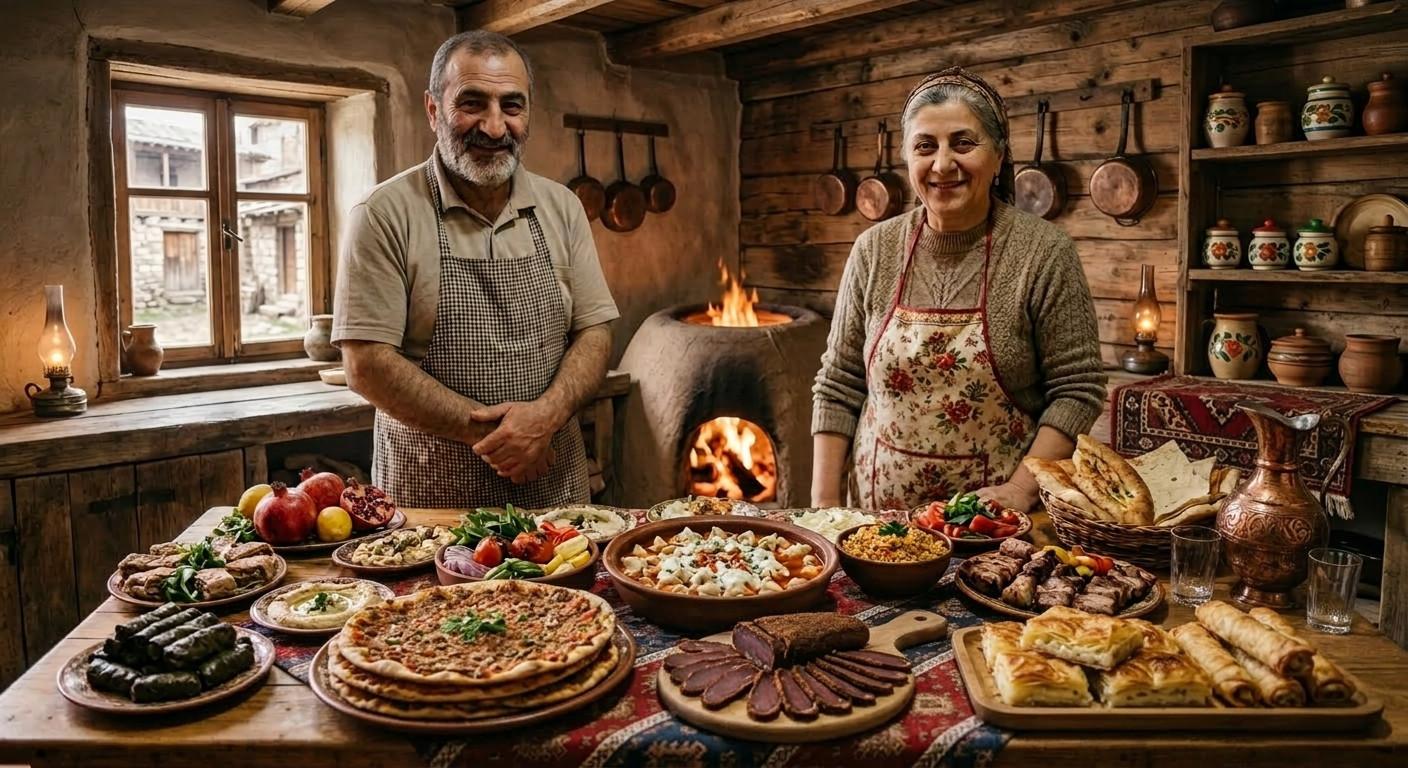
Western Armenian cuisine developed within the Ottoman Empire. Because Armenians lived in urban trade hubs and served as imperial palace chefs, their food integrated a wide variety of global spices like cinnamon and cumin. This tradition emphasizes complex pastries, cured meats like Basturma, and the use of bulghur, a cracked wheat grain.
In the diaspora, immigrants adapted these traditions to local ingredients, such as using American white rice to recreate traditional pilafs. Eastern Armenian cuisine evolved in the South Caucasus and under Soviet rule. This tradition focuses on simple, unadorned flavors from mountain greens and high-quality meats. Soviet industrialization shifted the primary meat source to pork, which became a staple in the Republic of Armenia.
Common dishes include Khash, a slow-simmered cow's hoof broth, and Zhingyalov Hats, a flatbread stuffed with 10 to 20 varieties of wild mountain greens. Repatriates are currently reuniting these fractured culinary identities in Yerevan. Syrian-Armenian and Lebanese-Armenian migrants fleeing civil war in the 2010s opened bakeries and spice shops in the capital. These artisans introduced authentic Western techniques, such as wood-fired lahmajun with paper-thin crusts, to a local market that previously relied on simplified Soviet-era versions.
Selected and summarized by local AI How we work