University of Galway aids coral reef restoration in Atlantic
Summary and headline written by AI from the source article. How we work
Researchers from University of Galway joined an international team to rebuild deep-sea coral reefs off the coasts of Ireland and France by deploying 3D-printed structures.
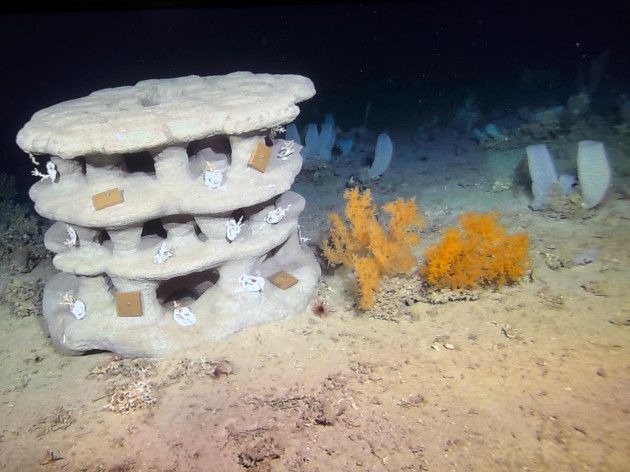
The team placed 23 artificial reefs at depths of 900 to 1,100 meters off the Porcupine Bank in Ireland and in the Guilvinec Canyon in the Bay of Biscay, France. These reefs, made of low-carbon concrete and volcanic material, are designed to provide shelter and surfaces for corals and other marine life to grow.
The project, called REDRESS, aims to restore habitats damaged by bottom trawling, a practice that easily harms the fragile cold-water corals. While regulations now protect many coral areas from trawling, scientists are working to actively help damaged reefs recover, as natural regrowth is very slow, only a few millimeters per year. Researchers are testing different methods to encourage coral growth, including adding oyster shells, ceramic plates, and even fragments of living coral to the artificial structures.
Early observations show that coral fragments placed last year are still alive, and various marine species like sea urchins and fish are already colonizing the new reefs. The team will continue to monitor the sites using photography, video, and 3D mapping to track the reefs’ development and assess the impact of factors like climate change and ocean acidification.