Scottish cattle help restore nature in the English Lake District

Headline and summary by local AI
The RSPB manages a conservation grazing project in Wild Haweswater, a site in the Lake District of England, using a herd of 53 Scottish-bred cows.
These Belted Galloways and Luings mimic the behavior of wild herbivores from before the Bronze Age to restore degraded habitats. Site manager Glen Swainson says the heavy-footed animals trample dense vegetation to allow young trees and delicate plants to grow.
The cattle use long tongues to pull at vegetation, creating varied grass heights that support insects, birds, and small mammals. These trees also help manage water flow to reduce local flood and drought risks. The RSPB moves the cattle in small groups to prevent overgrazing. During the winter, the organization places hay in areas of dominant rushes and bracken to encourage the animals to trample those specific spots.
Similar projects in Scotland and Berkshire use these breeds to restore rare heathlands and increase biodiversity.
Selected and summarized by local AI How we work
More in Recovery

Uganda launches taskforce to increase large carnivore populations by 30 percent
allafrica.com · 19 Nov 2026
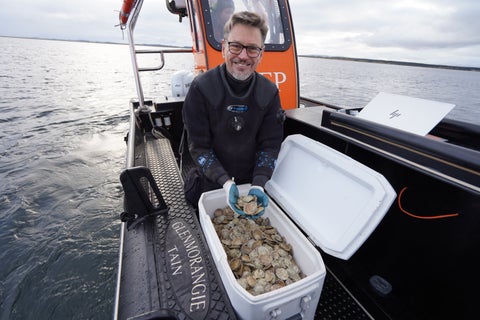
Native oysters reproduce in Scottish Highlands for first time in a century
independent.co.uk · 16 Nov 2026

TERI and Nokia India to restore 10 village ponds in Haryana
thebetterindia.com · 17 Nov 2026