Brazilian researchers argue frogs live in caves, not just visit
Summary and headline written by AI from the source article. How we work
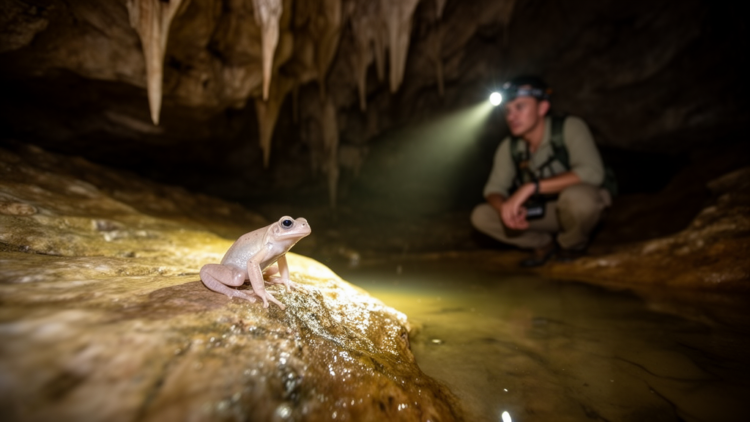
Researchers in Brazil are challenging the idea that frogs found in caves are simply lost, arguing that many species regularly use these subterranean spaces for shelter, feeding, and reproduction.
For decades, scientists believed frogs accidentally entered caves and either left quickly or died inside. This assumption limited research on amphibians in cave environments, resulting in data for only about 6 percent of Brazil’s 1,144 frog species.
The researchers compiled evidence from their own work and from other biospeleology experts, documenting frog species in caves across several Brazilian regions, including the Amazon, Atlantic Forest, and Cerrado. They found records of species like Adelphobates galactonotus and Bokermannohyla martinsi in caves formed in various types of rock. This broad geographic and taxonomic distribution led them to classify these frogs as “trogloxenes,” animals that intentionally inhabit caves for essential life activities.
The scientists acknowledge further research is needed to fully understand frog life cycles within caves, including diet, predation, and long-term population trends, but emphasize the importance of recognizing caves as true habitats. Currently, Brazilian law doesn’t protect frogs found in caves because they are not legally considered residents of these environments. Recognizing them as trogloxenes could provide legal grounds for conservation efforts, especially as caves face increasing threats from mineral exploration and urban development.