Vietnamese researchers document rare plant species in Mu Cang Chai Mountains
Headline and summary by local AI
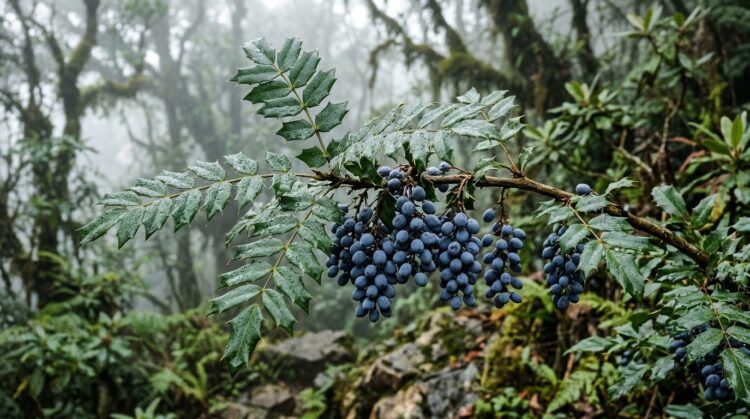
Researchers in Vietnam conducted a study to characterize the natural habitats and genetic profile of Berberis napaulensis, a rare plant species in the Berberidaceae family.
The team focused on populations located in the Mu Cang Chai Mountains within the Yen Bai Province to establish a foundation for conservation and future cultivation. The team used 400 square meter plots to survey the vegetation structure and observe the physical traits of the plant, including its leaves, flowers, roots, shoots, and fruits.
They analyzed environmental data from 2024 showing that the plant thrives in temperatures between 8 and 32 degrees Celsius and humidity levels ranging from 77 to 90 percent. The study also recorded monthly rainfall between 30 and 300 millimeters and sunshine durations between 90 and 195 hours. The researchers found that the perennial shrub grows under the canopy of subtropical mixed broadleaf vegetation at elevations of 1700 to 2300 meters.
The plants typically occupy slopes with a 10 to 15 percent inclination and experience light intensities between 29 and 37 percent. By isolating DNA and analyzing soil parameters like pH and nitrogen content, the team provided data to help create ecological zones for propagating the species in Vietnam and other regions with similar climates.
Selected and summarized by local AI How we work
Discovery: Archaeology, new knowledge of art, culture and history, forgotten history uncovered, something lost restored.