Veterans Health Administration’s screening catches lung cancer earlier
Summary and headline written by AI from the source article. How we work
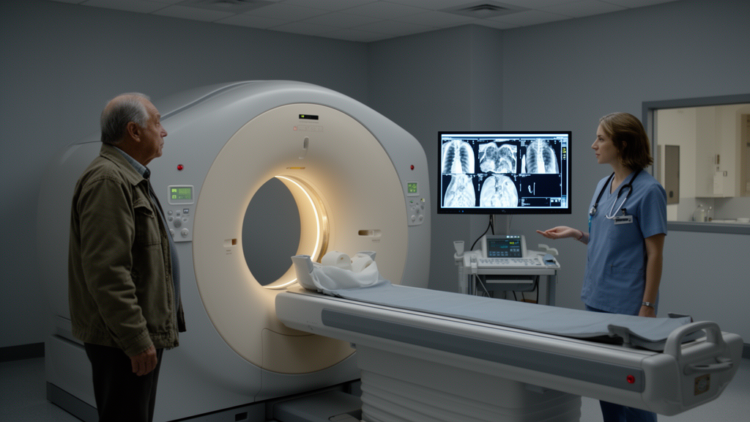
Researchers with the Veterans Health Administration discovered that veterans undergoing structured lung cancer screening received diagnoses at earlier stages of the disease compared to veterans diagnosed outside the program.
The study, conducted by a team led by Sharmily G. Roy at the Michael E. DeBakey VA Medical Center in Houston, analysed data from the VA Corporate Data Warehouse. The researchers focused on how organised screening programs, which include defined eligibility, standardised scans, and systematic follow-up, impacted diagnosis timing.
They compared veterans whose cancers were found through this structured pathway with those identified through other means, like scans ordered due to symptoms. The team found that the VA’s integrated healthcare system, with its single patient record across different specialties, helped close the loop on follow-up care and improve early detection. Lung cancer is the leading cause of cancer death in the United States, often diagnosed at late stages when treatment is less effective.
The study demonstrated that earlier diagnoses, enabled by structured screening, correlate with higher five-year survival rates, approaching 65 percent for localized cancers versus below 10 percent for distant spread. This suggests that investing in a well-designed screening program, rather than relying solely on imaging technology, is crucial for improving outcomes.
The Veterans Health Administration is now building a learning system where experiences from each medical centre contribute to program improvements, aiming to optimise screening for the approximately 19 million veterans they serve.