Sponge species confirmed in Yucatan cenotes after decades
Summary and headline written by AI from the source article. How we work
Researchers rediscovered the freshwater sponge Ephydatia fluviatilis in two cenotes, sinkholes, on the Yucatan Peninsula in Mexico, after it had gone unrecorded there for nearly 90 years.
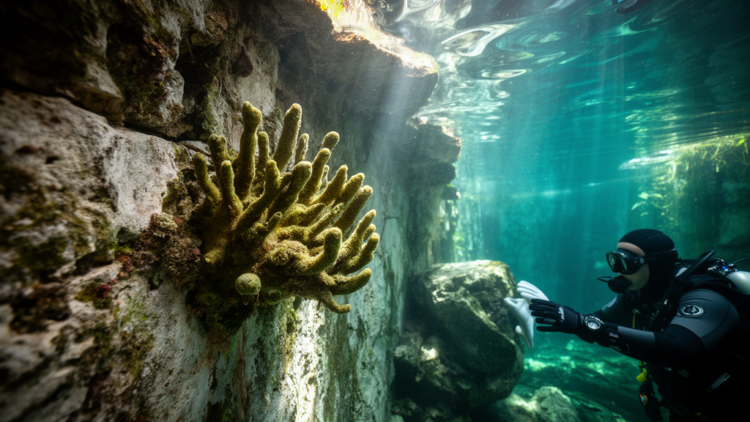
The team, led by scientists from UNAM’s Instituto de Ciencias del Mar y Limnología, conducted SCUBA surveys of the Sabak-Ha and Suhem cenotes, locating sponges attached to walls between the surface and 15 meters deep. They deposited specimens in the Colección Nacional del Phylum Porifera. Gerardo Green for further study.
The sponges showed different growth patterns in the two cenotes. In Sabak-Ha, the sponges formed large, greenish-yellow structures, while in Suhem, they were smaller and more irregular. Scientists examined the sponges’ skeletal structures under microscopes and analyzed their DNA, confirming they were E. fluviatilis and closely related to other species. The discovery brings the total number of known sponge species in Yucatan cenotes to three and the number of cenote ecosystems with sponge populations to six.
Researchers noted variations in the sponges’ structures between the two cenotes, suggesting that local environmental conditions influence their development. They believe further research will reveal more about these unique ecosystems and the sponges’ role within them.