Armenian culture marks life’s transitions with 40-day periods
Summary and headline written by AI from the source article. How we work
Shushan Karapetian, an Armenian studies scholar, observed that Armenian culture uses a 40-day period called “karasunk” to mark both birth and death.
This tradition, rooted in both Christianity and older folk beliefs, provides time for protection and adjustment during significant life changes. Armenia adopted Christianity in 301 AD, and the number 40 appears frequently in Christian sacred time, like the 40 days Jesus spent in the wilderness and the time between his resurrection and ascension.
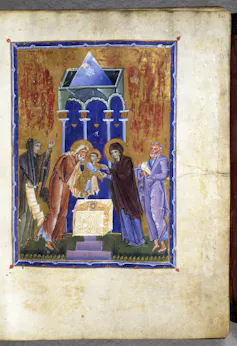
After a birth, the mother and child stay home for 40 days, limiting visitors and protecting them from perceived spiritual threats. Rituals like bathing the baby with blessed water and presenting them at church after the period end signify a re-entry into ordinary life. Similarly, after a death, loved ones observe a 40-day mourning period, displaying photos of the deceased and withdrawing from social activities.
This period allows the bereaved to adjust to life without their loved one, while also acknowledging a gradual departure of the deceased from the earthly world, as marked by prayers and gatherings. Karasunk represents a liminal state, a period between phases, where individuals are not fully in the old life or the new one, and the tradition extends beyond birth and death to include rites for newlyweds and newly ordained priests.


