Archaeologists discover ice age art in a Spanish cave hidden by modern graffiti
Headline and summary by local AI
Archaeologists discovered hundreds of prehistoric engravings in the Cova de la Font Major cave in Catalonia, Spain.
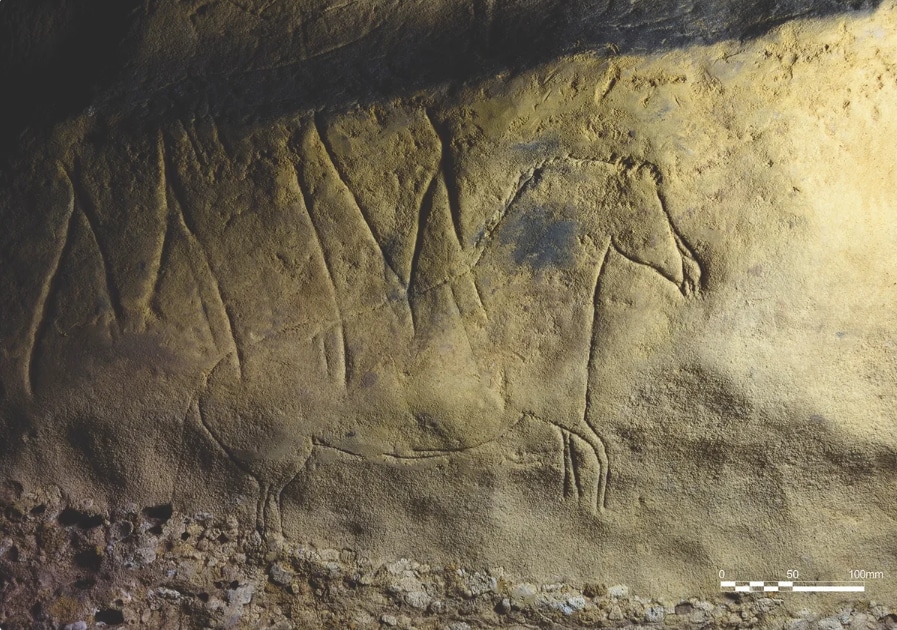
Josep Maria Vergès Bosch and Míriam Salas-Altès from the Catalan Institute for Paleoecology and Human Evolution identified the markings, which date back approximately 26,000 years. The researchers examined 280 prehistoric art motifs, including 55 depictions of animals such as horses, bears, and aurochs, which are the extinct ancestors of modern domestic cattle.
The artists also carved geometric patterns and curved lines, some of which appear to represent movement. These creators utilized the natural textures of the cave walls, using cracks and uneven surfaces to depict features like the ground beneath a horse. The art remained hidden for years because the carvings are difficult to see unless light hits the walls from specific angles.
The cave has been open to the public for about 70 years and was turned into a museum in the 1990s. Many visitors passed the site without noticing the ancient work because it was obscured by modern graffiti. Researchers believe more art might exist under layers of sediment that have filled parts of the cave system over time.
Selected and summarized by local AI How we work