Archaeologist argues Celtic ruler Verica was a woman
Headline and summary by local AI
Miles Russell, an archaeologist at Bournemouth University, argues that Verica, a Celtic leader in southern England, was a woman rather than a man.
Russell bases his theory on the name ending of Verica and the historical records of the Roman conquest of Britain in 43 n. Chr. While the historian Cassius Dio describes Verica as a prince who requested Roman aid against the Catuvellauni tribe, Russell suggests the Roman account may have been biased.
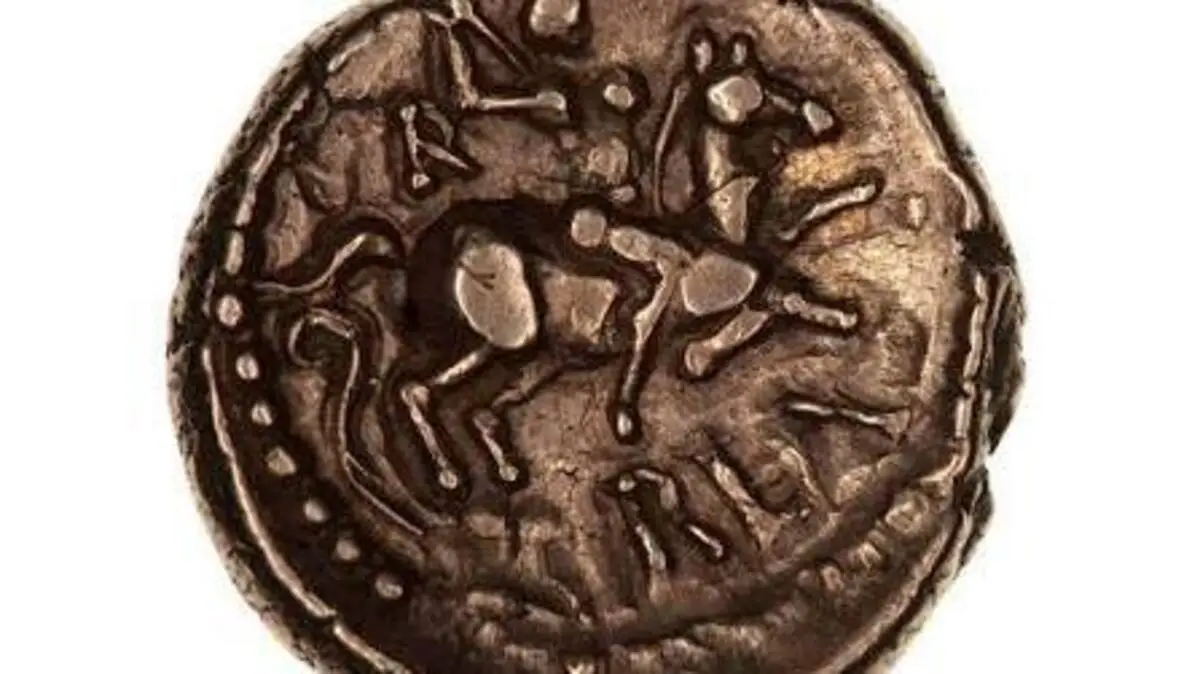
He argues that the Roman Emperor Claudius might have used the intervention of a female barbarian leader to bolster his own reputation as a military commander. The archaeologist points to a specific coin featuring the words Vir and Rex as evidence of Verica's identity. Russell describes the figure on the coin as a slender, female, and bare-breasted person riding a horse.
He notes that the title Rex was not gender-specific in the ancient world, citing Cleopatra as an example of a female ruler using the title. Historical context shows that female leaders like Boudica and Cartimandua were active in Britain during this period. While some Roman writers like Tacitus viewed female rulers with suspicion, Russell believes Verica was one of the earliest and most important British female leaders.
Verica was eventually expelled from England by the male king Caratacus and fled to Rome.
Selected and summarized by local AI How we work
More in Discovery

Syrian writer Abdul salam al-ajili blends medicine and folklore in fiction
enabbaladi.net · 8 Nov 2026

Egyptian soprano preserves legacy of composer Mohamed abdel wahab in new documentary
aawsat.com · 13 Nov 2026

Tokenizer gains come from readout and granularity rather than just roots
arxiv.org · 13 Nov 2026