Ancient Roman instruments recreate lost sounds of Pompeii
Summary and headline written by AI from the source article. How we work
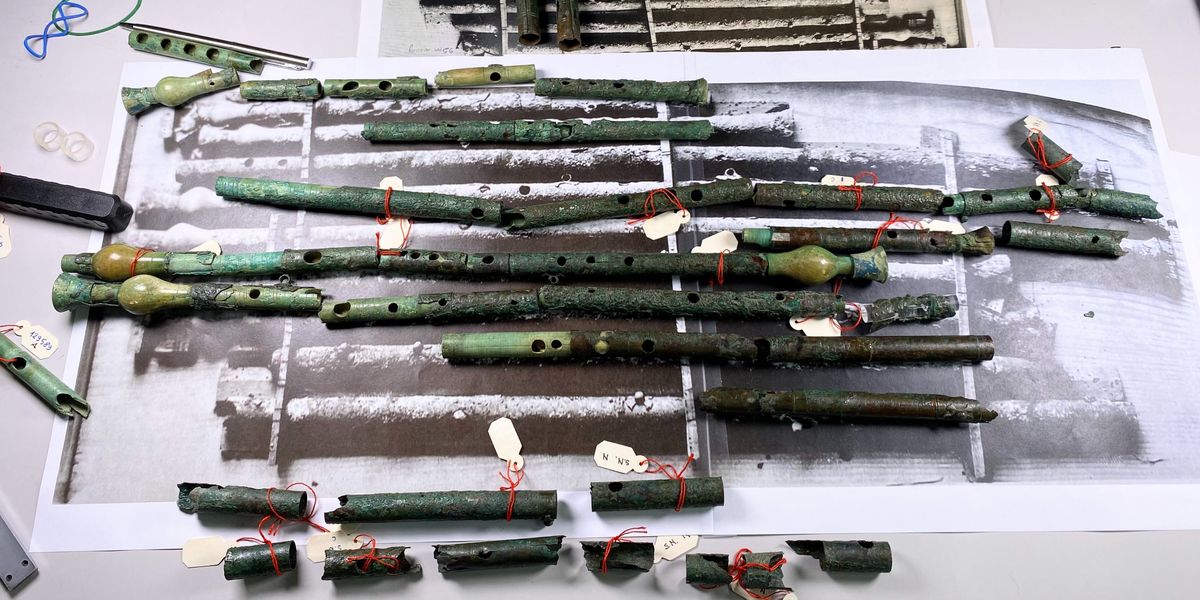
Archaeologists working near Pompeji, Italy, discovered nine ancient wind instruments over 120 years ago.
These instruments, called aulos in Greek, were typically played in pairs. Researchers have now reconstructed the fragmented pipes, making them playable after nearly 2,000 years. Ancient texts provide detailed information about music and scales from the Roman period, but offer little insight into how the music actually sounded. The discovery of the aulos is therefore important for musical archaeology.
The instruments were found in a Roman villa and represent a rare find. By reconstructing and playing the pipes, researchers hope to understand the sound of ancient music and gain a better appreciation for the musical culture of the time. The researchers made the reconstructed instruments playable, allowing them to approximate the music heard in Pompeii before the eruption of Mount Vesuvius.


