Orlando adapts to graphic novel form
Summary and headline written by AI from the source article. How we work
Susanne Kuhlendahl adapted Virginia Woolf’s novel Orlando into a graphic novel published by Helvetiq.
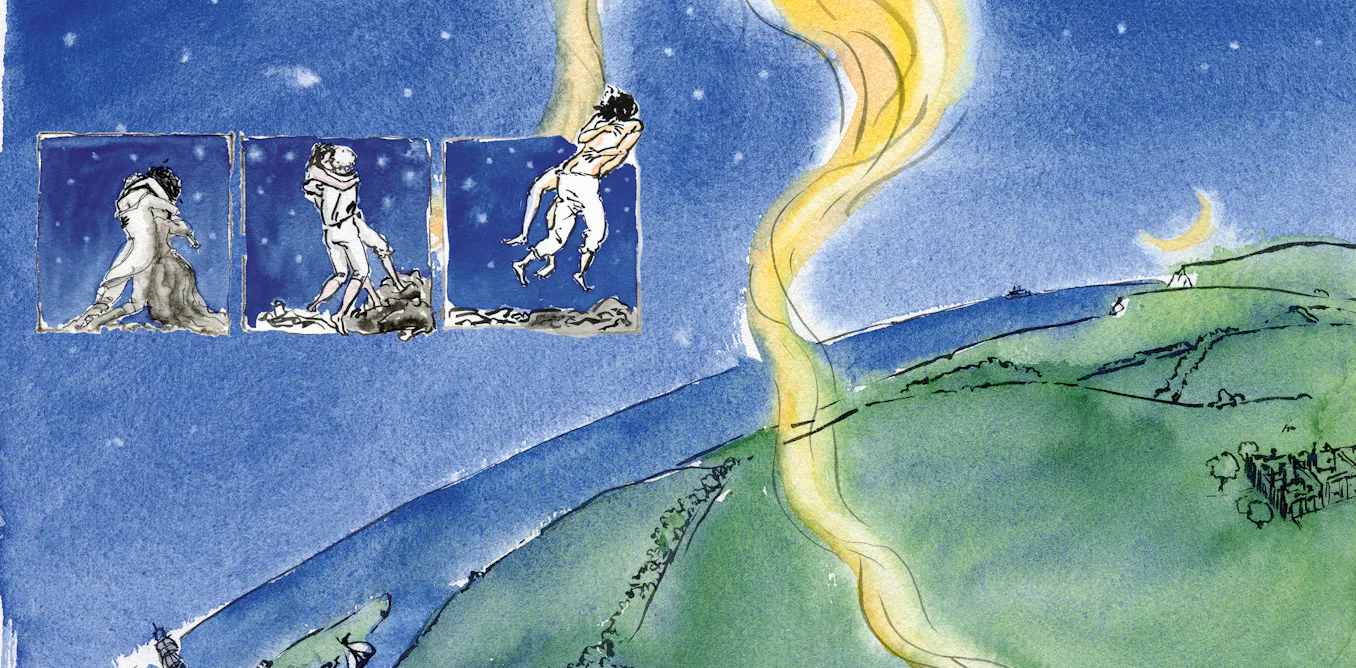
The original 1928 novel tells the story of a 16th-century English nobleman who becomes a woman and lives for centuries. Woolf wrote the story partly inspired by her relationship with aristocrat Vita Sackville-West and the queer community of the Bloomsbury Group. Kuhlendahl’s version presents the fantastical story with over 200 pages of illustrations, following Orlando from Elizabethan England to 1920s London.
The narrative doesn’t attempt to explain the character’s gender change or immortality, maintaining the playful tone Woolf intended as a break from her other writing. Though concepts like nonbinary identity didn’t exist in the 1920s, Orlando is now seen as a foundational text for gender fluidity and queer literature. This graphic novel joins a growing number of adaptations of Orlando, including a documentary, ballet, fashion collection, and film.
While the graphic novel largely serves as an accessible summary of the original, it contributes to a current trend of LGBTQIA+ narratives in graphic form and offers a new entry point for readers unfamiliar with Woolf’s prose. The story emphasizes pleasure and acceptance, a message that feels particularly relevant given recent political backlash against transgender rights.