Dolls return home: an Australian community reclaims ancestral objects
Summary and headline written by AI from the source article. How we work
In 2023, the Manchester Museum in the United Kingdom returned 174 Dadikwakwa-kwa dolls to the Anindilyakwa people of Groote Eylandt, an Indigenous Australian community.
These dolls, crafted from natural materials, traditionally teach children about kinship and their connection to the land and are considered living objects holding ancestral knowledge. The Repatriates Collective, a group of international artists and researchers, documented this return as part of the “Tide of Returns” exhibition currently on display in Venice, Italy.
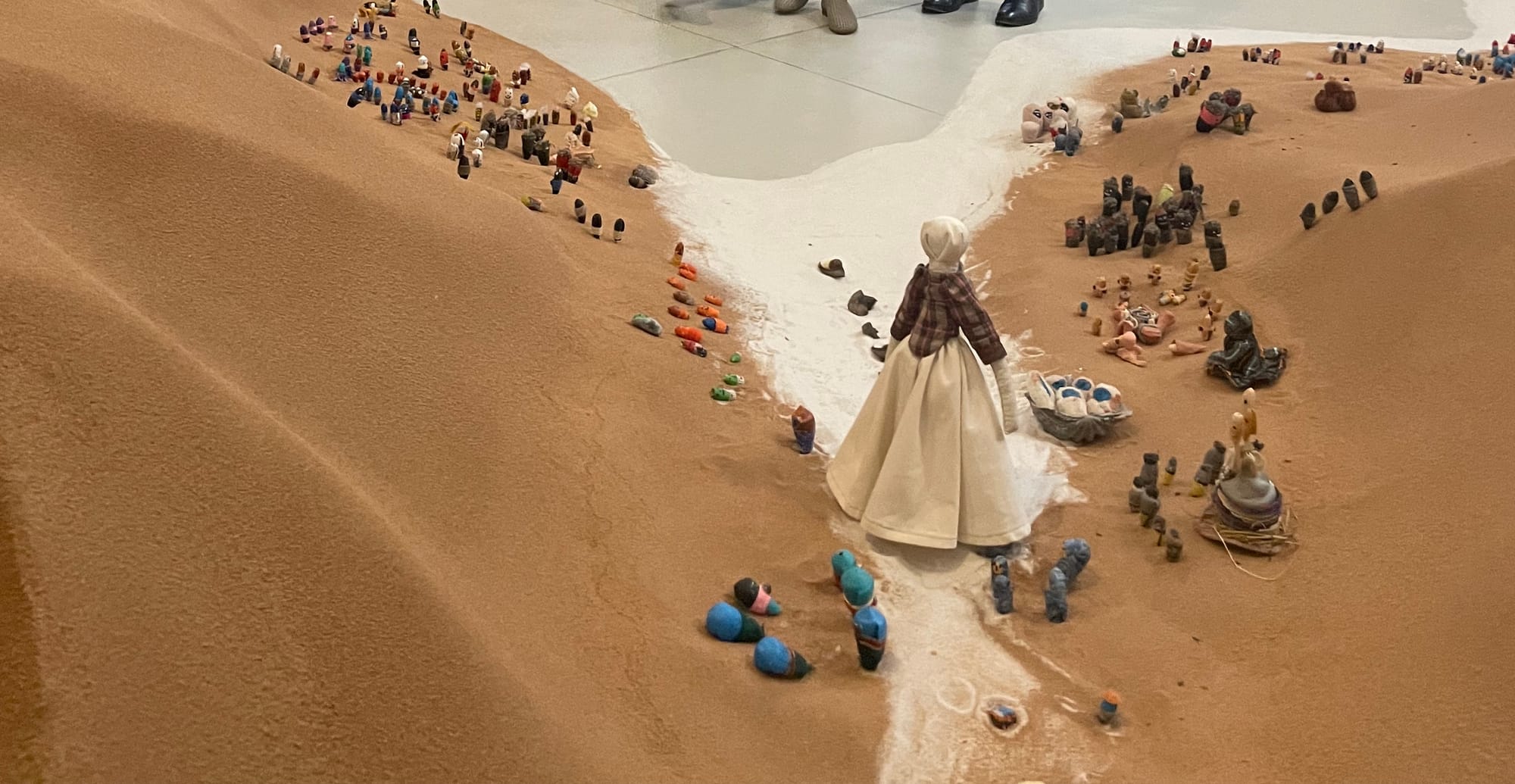
The exhibition, curated by Khadija von Zinnenburg Carroll, explores the significance of repatriated objects beyond simple ownership. It features an installation with mounds of sand from Australia populated by the returned dolls, alongside a film showing Anindilyakwa women preparing the dolls for their journey to Venice and performing rituals to revitalize them. The artwork emphasizes the enduring cultural connections within the Anindilyakwa community despite colonial disruption.
Another installation by Verena Melgarejo Weinandt examines stereotypes surrounding Indigenous peoples, using textiles and video to explore how representation can both acknowledge and perpetuate harmful imagery. The exhibition as a whole presents restitution not as a final resolution, but as a starting point for deeper conversations about possession, representation, and memory. “Tide of Returns” will remain at Ocean Space in Venice through October 11.