A family portrait reveals the tragic fate of a French Jewish elite
Headline and summary by local AI
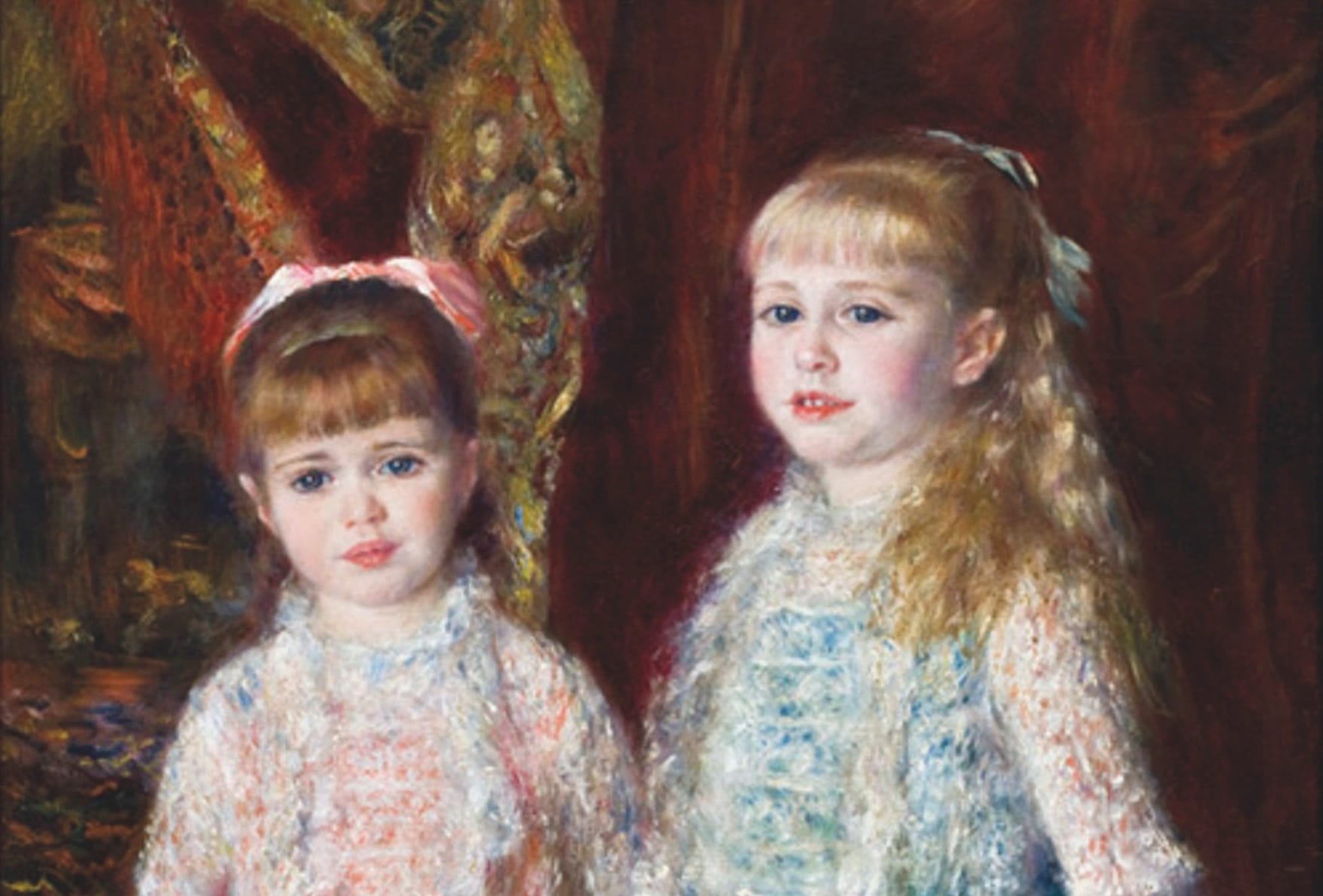
Pierre-Auguste Renoir painted a double portrait of four-year-old Alice and six-year-old Elisabeth Cahen d’Anvers in 1881 at a Parisian townhouse.
The sisters were the daughters of Louis Cahen d’Anvers, a Jewish banker, and Louise Cahen d’Anvers, a prominent socialite who hosted a famous salon for artists and writers. Renoir captured the girls in a lavish salon, depicting them in lace and satin. Author Catherine Ostler explores the lives of these sisters and their family in her book, The Renoir Girls.
The narrative follows the Cahen d’Anvers family as they navigated the high society of Belle Époque Paris while facing rising antisemitism. The family remained deeply tied to French culture, restoring historical properties and supporting philanthropic causes. However, political instability and the Dreyfus Affair, which involved a Jewish officer framed for treason, polarized the nation and exposed the family to social hostility. The sisters pursued different paths of assimilation, including religious conversions and marriages to aristocrats and British officers.
Despite their status and wealth, the family faced a tragic end during the Nazi occupation of France in the 1930s. Four family members died in concentration camps. Elisabeth, who had converted to Catholicism years earlier, was betrayed by a village mayor in 1944 and died while being sent to Auschwitz.
Selected and summarized by local AI How we work