Artist examines OPEC’s role in decolonization and cultural exchange
Summary and headline written by AI from the source article. How we work
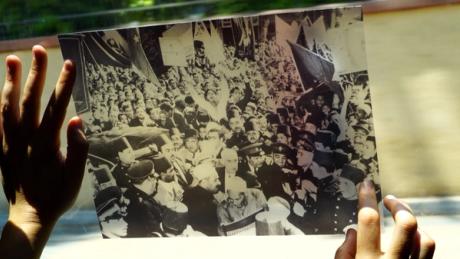
Iranian Canadian artist Sanaz Sohrabi created the film An Incomplete Calendar, which explores the history of the Organisation of the Petroleum Exporting Countries (Opec) and its connections to anti-imperialist movements. Sohrabi used archival footage, photographs, and voiceovers from multiple commentators to examine Opec’s early promise as a force for both political and cultural solidarity. She collected materials over six years from flea markets, bookshops, and online exchanges across continents, focusing on the period of decolonization in the 1950s and 1960s.
The film highlights moments of cooperation between nations like Iran and Egypt, specifically referencing Iranian Prime Minister Mohammed Mossadegh’s 1951 visit to Cairo and Egyptian President Gamal Abdel Nasser’s nationalization of the Suez Canal. Sohrabi contrasts this earlier unity with the current conflicts in the Middle East, including the war between Yemen and Saudi Arabia, and attacks by the US and Israel on Iran.
An Incomplete Calendar also features a rediscovered 1980 vinyl recording by a Venezuelan university choir, which performed songs in multiple languages from Opec member countries. The film concludes with the shift in Opec’s dynamics in 1980, as political Islam, revolution, and war began to dominate the organization, though it suggests the possibility of alternative paths through scenes of cultural exchange.
The film recently screened at the Vancouver International Film Festival and will appear at several festivals in Chile, Colombia, and the US.


