Ancient Irish cave markings may rewrite human history
Summary and headline written by AI from the source article. How we work
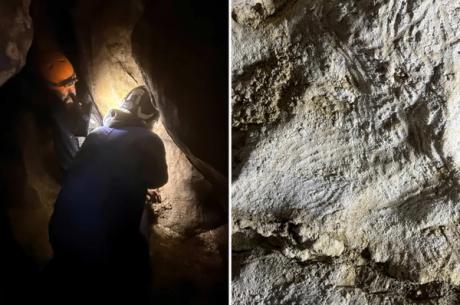
Genevieve von Petzinger and a team of researchers discovered potential cave markings at eight sites in southwest Ireland, suggesting humans inhabited the country much earlier than previously believed.
The team, working under the Lost Land Bridge Project, found finger flutings, ochre, and charcoal marks, some possibly depicting animal silhouettes, within the caves. These markings could date from 15,000 to 10,000 years ago, making them the first known cave art from Ireland’s last Ice Age.
For years, archaeologists considered Ireland one of the last parts of northwestern Europe settled by humans, with a 12,500-year-old bear kneecap from County Clare as the earliest accepted evidence. The team theorized that lower sea levels during the Late Ice Age may have created a land bridge connecting Ireland to Wales, where rock art has been dated as far back as 17,100 years ago. This prompted them to search for similar art in Ireland.
To pinpoint likely locations, the researchers employed LIACARA, an artificial intelligence system they designed. LIACARA analyzed archaeological data, maps, and geological information to predict caves likely to contain markings. The team is now conducting technical analysis, including radiocarbon and uranium-series dating, to confirm the age of the discoveries and will attempt ancient DNA analysis of the finger flutings. They are withholding specific locations to protect the sites while the research continues.